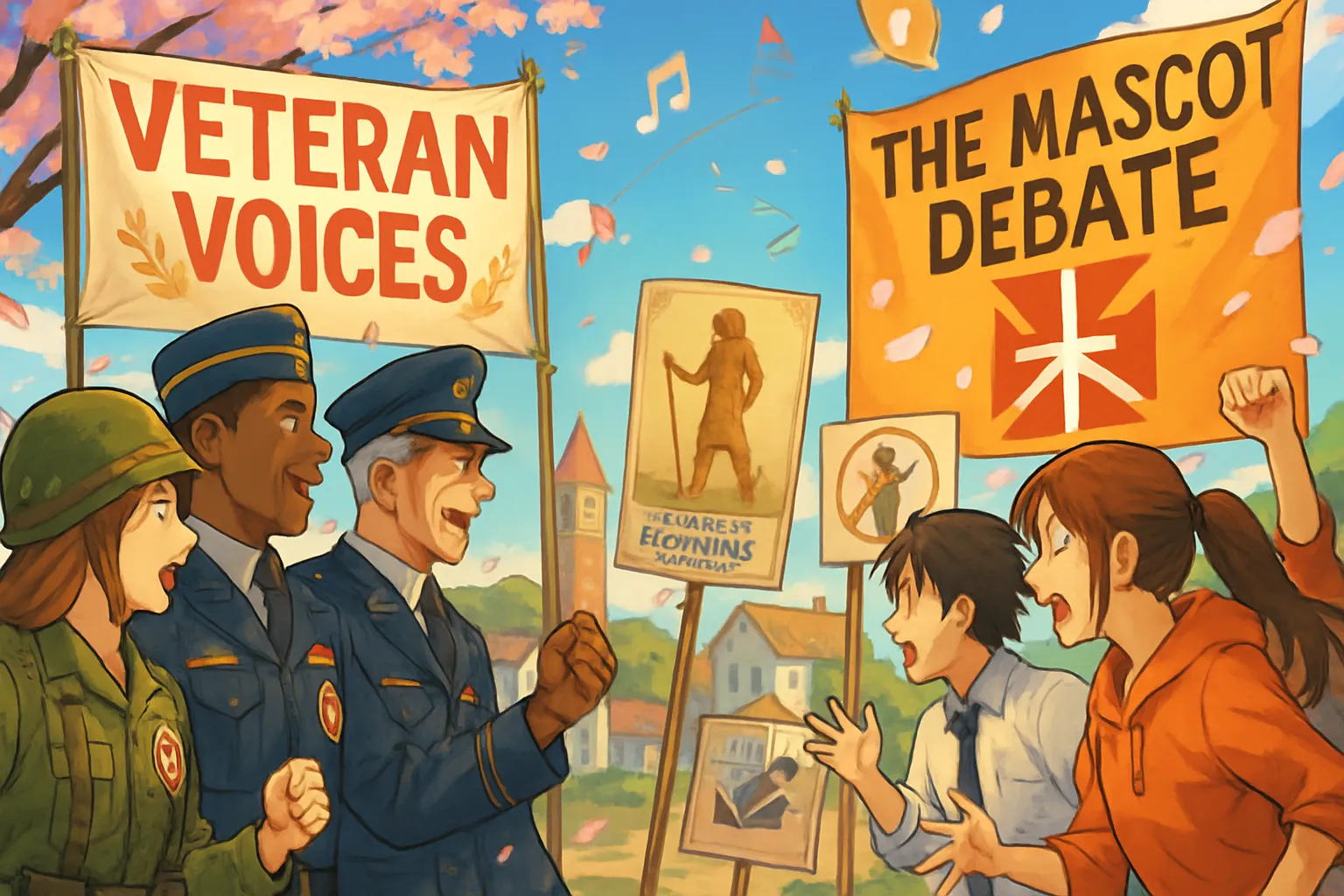
When Belding Area Schools retired the Redskins mascot, it marked not just a change in logos or team names, but a cultural and emotional pivot point for many—especially local veterans who still hold strong ties to the old identity. This led to a unique act of remembrance: the Belding veteran community erected a 'Redskins' veteran memorial in the town’s veterans park, blending respect for military service with a controversial symbol. Now, the question begs—will Saranac’s veteran community follow suit? As I dove into this story, I realized it’s far more than a sports debate; it’s a clash of values, memory, and identity.
Belding’s Mascot Change: A Veteran Community’s Complex Tribute
As I’ve reported on the evolving mascot debate in Ionia County, Belding’s journey stands out for its complexity and the deep ties between the school’s identity and its veteran community. In late 2016, following months of community forums, surveys, and emotional school board meetings, Belding Area Schools officially retired the “Redskins” mascot. This decision came after years of gradual change, culminating in a unanimous board vote that prioritized student focus and community unity over a contentious symbol.
What makes Belding unique in this debate is the response from local veterans. For many, the Redskins mascot was more than a school emblem—it was woven into their sense of service and sacrifice. After the mascot’s retirement, a group of Belding veterans took it upon themselves to establish a “Redskins” veterans memorial in the city’s veterans park. This was not a school-sponsored project, but a grassroots effort by those who felt the name had honored their service and the memory of fellow veterans.
The memorial itself is a striking example of how communities try to balance respect for tradition with changing social values. While the school moved forward with its new Black Knights identity, the veterans’ memorial became a separate act of remembrance. For its supporters, the monument is a way to honor Belding graduates who served in the military under the Redskins name, preserving a piece of local history even as the school district sought to move beyond it.
This dual approach—retiring the mascot at the school level while maintaining a public tribute in the veterans park—reflects the complicated emotions at play. Veterans and their families often spoke of pride in the Redskins name, viewing it as a symbol of strength and unity during their years of service. At the same time, the broader debate over Native American imagery was impossible to ignore. The memorial’s existence sparked its own conversations about how best to honor veterans without perpetuating stereotypes or causing harm to Native communities.
In Belding, the veterans’ memorial stands as a testament to the community’s attempt to honor its past while navigating a charged and evolving national conversation. It is a physical reminder of how deeply school symbols can resonate, and how efforts to change them can lead to new forms of remembrance and dialogue.
Saranac’s Ongoing Mascot Debate and Veteran Community: Potential for a Similar Memorial?
As I continue to report on the evolving mascot debates in Ionia County, Saranac stands out for its decision to retain the “Redskins” name, even as neighboring districts like Belding have moved away from Native American nicknames. In November 2015, the Saranac Board of Education voted 4-3 to keep the Redskins mascot, a decision made despite clear opposition from tribal representatives and some board members themselves. Superintendent Jason Smith has since acknowledged that the mascot issue remains unresolved, with plans to revisit the topic in the near future. For now, however, the school’s focus is on its back-to-school plan, leaving the mascot question lingering in the background.
This ongoing debate places Saranac in a unique position, especially when compared to Belding’s recent journey. After Belding retired the Redskins name, the community came together to create a veterans memorial that honored alumni who served in the military. This memorial, initially proposed to include the “Redskins” name, ultimately became a symbol of unity under the new Black Knights identity. The process in Belding was marked by open forums, input from Native American leaders, and a student-led rebranding effort, all supported by a significant grant from the Native American Heritage Fund.
In Saranac, the veteran community now faces a difficult ethical question: should they consider a similar memorial while the Redskins name remains in use? On one hand, many veterans and alumni feel a deep connection to the mascot, which has been part of Saranac’s identity for generations. On the other, there is growing awareness of the concerns voiced by Native American groups, who view the name as offensive and inappropriate for public honorifics.
Unlike Belding, where the mascot change paved the way for a new, inclusive memorial, Saranac’s divided stance complicates the path forward. Any effort to create a veterans memorial that references the Redskins name could spark renewed controversy, both within the school community and among local tribes. The board’s narrow vote and Superintendent Smith’s comments suggest that the issue is far from settled, and that any future memorial would need to carefully balance tradition, respect for veterans, and cultural sensitivity.
As Saranac prepares to revisit the mascot debate, the experiences of Belding—and the ethical dilemmas faced by its veteran community—offer important lessons for how to navigate these sensitive questions in a way that honors all voices.
Ethical and Moral Dimensions: Veterans’ Memorials and The Redskins Symbol
As I’ve reported on the mascot debate in Ionia County, the intersection of veterans’ memorials and the “Redskins” symbol stands out as one of the most complex ethical questions facing our communities. The use of the Redskins name in memorials meant to honor military service—like those in Belding—forces us to confront the tension between honoring veterans and respecting Native American voices who find the term deeply offensive.
For many local veterans and their families, the Redskins symbol has long been woven into the fabric of community pride and remembrance. In Belding, for example, the name appeared not only on athletic uniforms but also on memorials dedicated to alumni who served in the armed forces. Supporters argue that the mascot is a tribute, a way to honor the fighting spirit and sacrifice of both the school’s teams and its veterans. As one wrestling parent told the Belding school board, “This is about tradition and respect for those who came before us.”
Yet, as Native American representatives like Erik Rodriguez of the Saginaw Chippewa Tribe explained during public meetings, the term “Redskins” is widely recognized as a racial slur, rooted in a history of violence and dehumanization. No federally recognized tribe supports its use. The presence of this symbol on a veterans’ memorial, then, raises a difficult question: can a community truly honor one group while disregarding the pain of another?
These debates reveal that the ethical challenge is not simply about tradition versus change. It is about whose stories are centered in our public spaces and whose pain is acknowledged. The Belding process, which included listening sessions with Native Americans and veterans alike, made clear that honoring military service should not come at the expense of perpetuating racial stereotypes. As Brent Cummings, a Belding alum of partial Native heritage, realized during his college years, “What we think is honoring can actually hurt.”
Balancing veteran pride with the moral imperative to respect Native American perspectives challenges us to move beyond simplistic notions of heritage. The question remains: is it possible—or even permissible—to separate the intent to honor from the impact of harm? In Belding, the eventual removal of the Redskins name from memorials and uniforms was a step toward resolving this dilemma, but the conversation about memory, respect, and representation continues in Saranac and beyond.
Lessons from Belding: Community Engagement, Funding, and Healing
Reporting on the mascot debate in Ionia County, Belding’s experience stands out for its transparent and inclusive approach. When the district faced mounting pressure over the “Redskins” name, leaders chose to engage the community at every step. Superintendent Brent Noskey described how Belding organized open committee meetings, inviting residents, students, and Native American representatives to share their perspectives. This allowed for honest conversations about the history and meaning behind the mascot, as well as the reasons many found it offensive.
Native American voices played a crucial role in this process. Erik Rodriguez from the Saginaw Chippewa Tribe and Belding alumni like Patrick Shannon and Brent Cummings provided firsthand accounts and research, helping the community understand why the term “Redskins” was problematic. Parents, like Carmin Barker, also contributed by independently researching tribal positions and sharing their findings. This educational effort was paired with a democratic survey of local residents, which revealed a divided community but gave the school board a clear sense of public opinion.
Financial concerns were addressed head-on. Rather than relying on taxpayer dollars, Belding secured nearly $335,000 from the Native American Heritage Fund. This grant, combined with public donations, allowed the district to rebrand uniforms, signage, and apparel quickly and thoroughly. Superintendent Noskey acknowledged that this funding was essential, making it possible to move forward without financial strain on the community.
Despite these careful steps, the transition was not easy. As soon as the board voted to retire the “Redskins” name and adopt the “Black Knights,” backlash followed. For several months, board members and administrators faced angry calls, social media criticism, and hate mail. Yet, as the new mascot took hold during the 2017 fall sports season, resistance began to fade. By 2020, according to Noskey, the controversy had largely subsided, and the new identity was widely accepted.
Belding’s journey offers several key lessons:
- Transparent dialogue and open forums can help communities process difficult changes.
- Education from Native American voices is vital for understanding the impact of mascots.
- Democratic surveys ensure that all viewpoints are heard.
- Outside funding—like the Native American Heritage Fund—can ease the financial burden of rebranding.
- Patience and persistence can lead to healing, even after initial backlash.
Wild Card: Imagining a Future Where Veterans and Indigenous Voices Unite
As I reflect on the ongoing mascot debate in Ionia County, I find myself wondering what could happen if the conversation shifted from conflict to collaboration. The stories of Belding and Saranac show how difficult it can be to balance tradition, community pride, and respect for Native American perspectives. But what if, instead of choosing sides, local veterans and Indigenous leaders came together to create something new—a memorial that honors service and sacrifice without relying on outdated or offensive symbols?
Imagine Saranac’s veterans and tribal representatives sitting at the same table, sharing their histories and hopes for the future. Instead of focusing on what divides them, they could work together to design a memorial that recognizes the bravery of all who served, regardless of background. Such a project could move beyond the “Redskins” name and imagery, offering a space for education, remembrance, and healing. It would send a powerful message: that honoring veterans does not require holding onto symbols that cause pain for others.
Belding’s own veterans memorial could also become a starting point for broader dialogue. The community there has already shown that change is possible when people listen to each other and seek common ground. By inviting Native American voices into the conversation about how to remember and honor the past, Belding could help lead the way in redefining what memorials mean in a diverse society. This approach would not erase history, but rather add layers to it—acknowledging both the service of veterans and the experiences of those whose cultures have too often been misrepresented or ignored.
Memorials that embrace complexity, rather than nostalgia, might be exactly what our communities need right now. They can serve as reminders that history is not static, and that reconciliation is possible when we are willing to listen and learn from one another. As the debate over mascots continues in Saranac and beyond, I hope local leaders will consider this path forward—a future where veterans and Indigenous voices unite, not just to settle old arguments, but to build new traditions rooted in respect and understanding.
TL;DR: Belding replaced its Redskins mascot with the Black Knights, facing community turmoil. The veteran community responded by creating a Redskins veteran memorial. Saranac maintains the Redskins name, stirring debate over if its veterans will seek a similar memorial. This tension exposes profound ethical questions about honoring veterans, cultural sensitivity, and community identity.