History Below the Surface: Deconstructing the U-Boat War, Power, and the Human Cost – A Radical Reckoning with "Wolfpack"
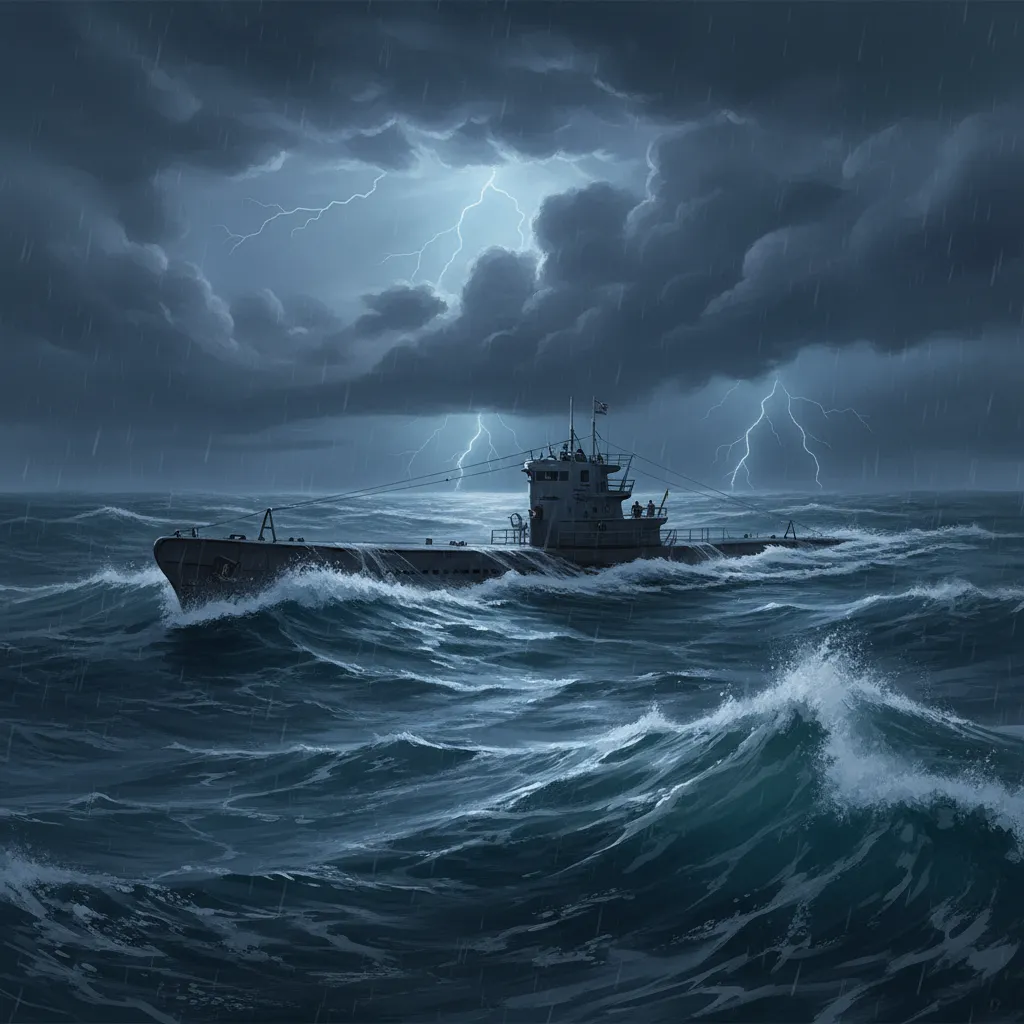
When I first cracked open “Wolfpack: Inside Hitler’s U-Boat War,” I didn't expect to emerge blood-boiling with questions about power and the capacity of 'official' history to bury the most essential truths. My own grandfather, a merchant marine, used to spit on the ground at the memory of 'those in charge.' With Moorhouse as both guide and teller, I plunged into the damp agony and psychological torment not just of German submarine warfare, but of an entire social order that weaponized young men—flesh and bone—into cogs of imperial violence. The myth of honor and sacrifice isn’t simply a distortion; it is a tool for shielding power and veiling the true cost extracted from the working class. This blog is not a review. It is a call to reject every fiction peddled by the State, to confront the rotting hull beneath the patriotic paint.
Wolves in the Machinery: Power, Myth, and the Manufacture of War
Immersing myself in Wolfpack: Inside Hitler’s U-Boat War, I found myself not only submerged in the physical world of the German submariners, but also in the deeper currents of how war is remembered, retold, and repackaged for public consumption. Roger Moorhouse’s book is more than a chronicle—it is a challenge to the sanitized narratives that have long shaped our understanding of WWII. The “U-boat menace” was not just a military threat; it became a tool of State power, a myth manufactured to serve interests far beyond the Atlantic’s stormy waves.
Exposing Sanitized Narratives: The U-Boat as Propaganda
Popular history often repeats Churchill’s famous line—that the U-boats were “the only thing that ever really frightened me.” This phrase, echoed in countless documentaries and textbooks, is more than a reflection of strategic anxiety. It is a piece of narrative machinery, designed to dramatize the threat and justify extraordinary measures. As Moorhouse shows, the myth of the unstoppable “wolfpack” was as much about rallying the home front and securing resources as it was about describing reality. In this way, the story of the U-boat war became a kind of State propaganda, shaping public perception and policy alike.
Patriotic Myth-Making as Class Control
Reading the stories of U-boat crews, I was struck by how their suffering was often erased by the language of heroism. Terms like “first Happy Time” and “second Happy Time” gloss over the trauma, filth, and fear that defined life below the surface. These phrases are not neutral; they are instruments of what Marx called “false consciousness,” turning workers and soldiers into symbols for national pride while their pain is quietly ignored. I recall my own grandfather’s anger at the glorification of war—how medals and parades could never make up for the loss of friends or the scars left behind.
Historical Narratives as Instruments of Bourgeois Ideology
Moorhouse’s German perspective in Wolfpack lays bare how historical narratives serve the interests of those in power. As Marx and Engels wrote,
‘The bourgeoisie has torn away from the family its sentimental veil, and has reduced the family relation to a mere money relation.’ (Marx & Engels, 1848/2004, p. 11)
In war, the same logic applies: the suffering of ordinary people is reframed as noble sacrifice, while the real profits—arms contracts, national prestige, and control over resources—flow upward. The stories we tell about war are not just about the past; they are about who benefits in the present.
Who Profits? Tracing the Flow from Myth to Power
State: Justifies conscription, rationing, and surveillance in the name of existential threat.
Corporate: Arms manufacturers and shipping interests thrive on the mythology of menace.
Media: Sells stories of heroism, erasing the trauma of workers and families.
Moorhouse’s Book Review Wolfpack is a call to see through these myths. The real legacy of the U-boat war is not found in sanitized narratives or patriotic slogans, but in the lived experience of those who endured—and in the ongoing struggle to reclaim their stories from the machinery of power.
Human Refuse in Steel Tombs: The Submarine as State-Instrument and Prison
Immersing myself in the U-Boat War history through Moorhouse’s Wolfpack, I was struck by the brutal conditions that defined every moment of a U-Boat crew’s existence. These men, pressed into steel tubes just 65 meters long, became human refuse—disposable commodities sacrificed for imperial ambition. The German state, in its relentless pursuit of victory, transformed its own sons into mere cogs, their suffering and deaths the price of national strategy. Lenin’s words echo through every page:
“The state is a special organization of force: it is an organization of violence for the suppression of some class.” (Lenin, 1917/1975, p. 17)
Nowhere does this ring truer than in the U-Boat fleet. The U-Boat crew hardships were not accidental but engineered, a direct result of resource extraction and alienation. The infamous “U-boat stink”—a sickening blend of sweat, diesel, and rot—clung to every inch of the hull. Hygiene was a forgotten luxury: a single change of underwear for patrols lasting up to eight weeks, rare splashes of water, and the constant damp. The practice of hot-bunking, where bunks were shared in shifts, bred skin diseases and scabies. Moorhouse details how even sexually transmitted infections spread, with illness often treated as a disciplinary failure, not a symptom of systemic abuse.
Heinous living conditions: The U-boat stink, skin diseases, and hot-bunking—all symptoms of Capital’s disregard for life.
State discipline: Illness was criminalized, and collective punishment was the norm. To fall sick was to risk punishment, further dehumanizing the crew.
Losses as liquidation: The U-Boat death rates were staggering—75% of crews perished, the highest attrition in any German military branch. Each loss was not just a statistic, but a liquidation of the workforce in service to national ‘victory.’
Technological ‘progress’—from radar to sonar cloaks—was never about life or freedom, but about increasing the efficiency of death. As Lenin warned, innovation here served only the machinery of violence. The State’s violence is always personal. I imagine the psychological toll: a young man, plucked from a desk job, thrust into this steel tomb, stripped of agency, forced to endure weeks of darkness, filth, and terror. Privation and failure became daily realities, and the line between discipline and cruelty blurred until both were indistinguishable.
After 1941, as seasoned crews were lost, replacements arrived with scant training, facing a tightening Allied noose. The system consumed them with chilling efficiency. Disease, exhaustion, and fear were constant companions, yet the expectation was unwavering obedience. The U-Boat War history is not just a story of strategy or machines, but of ordinary people subjected to extraordinary suffering—proof that, in the end, the State’s greatest instrument is not technology, but the human beings it bends, breaks, and discards.
The Dialectics of Hunter and Hunted: Technology, Adaptation, and the (False) Promise of Progress
Immersing myself in the Battle of the Atlantic through Roger Moorhouse’s Wolfpack, I found my assumptions about technological advancements in U-boats and the myth of inevitable progress upended. The story of the German U-boat campaign is often told as a tale of innovation—Enigma machines, radar, and the desperate late-war Alberich sonar cloak. But as I walked with Moorhouse through the cramped, fetid hulls, I saw how these so-called breakthroughs masked a deeper, ongoing violence—one that pitted ordinary men against the machinery of state and capital.
The relentless “cat and mouse” between hunter and hunted was not a clean contest of wits, but a brutal spiral of escalation. Each new Allied technology—radar-equipped aircraft, improved depth charges, codebreaking—forced German crews into ever more desperate adaptations. The numbers are staggering: by January 1941, British imports had been slashed by 50% compared to the previous year, a testament to the U-boats’ initial strategic threat. Yet by “Black May” 1943, the tide had turned so completely that Admiral Karl Dönitz, often caricatured as a conservative, was forced to withdraw his wolfpacks from the Atlantic, suffering a double loss—of both material and organizational strength.
Dönitz emerges in Wolfpack not as a simple villain or a static figure, but as an agent of innovation hemmed in by the constraints of the Nazi war machine. He grasped the need for adaptation, pushing for technological leaps like the Alberich sonar cloak. But these efforts were always reactive, shaped by the industrial might and scientific advances of the Allies. The shift from depth charges to aerial warfare—radar-equipped aircraft became the true U-boat killers—was not just a technical detail, but a sign of how military-industrial priorities shape who dies, and how. The popular image of U-boats succumbing to depth charges is, as Moorhouse shows, a myth; it was the eye in the sky, not the hunter in the sea, that sealed their fate.
This endless escalation, this logic of “adapt or perish,” is itself a form of violence. I can’t help but ask: how many millions must be forced to adapt, to suffer, so that a few may profit from the machinery of war? The submarine war’s end was not a triumph of progress, but a calculated retreat by the State—an admission that even the most advanced technology cannot erase the human cost. As Bakunin wrote,
“The passion for destruction is also a creative passion.”
(Bakunin, 1873/1974, p. 58). In the U-boat campaign, destruction and creation were two sides of the same coin, each fueling the other in a cycle that left only loss in its wake.
The myth that technological advancement equals salvation is ruthlessly critiqued in Wolfpack. The real story is not one of progress, but of ordinary people caught in the gears of a vast, indifferent machine—forced to adapt, to innovate, and ultimately, to endure.
Agency Amid Liquidation: Human Stories, Resistance, and the Limits of Liberty
Claustrophobia and escape are not just physical realities in Roger Moorhouse’s Wolfpack; they are psychological battlegrounds. Immersed in the U-Boatmen’s voices, I found that the struggle for agency was as fierce as any battle with Allied destroyers. The story of U-977 stands out—a rare moment when the crew, facing the collapse of the Third Reich, took a democratic vote. Their decision: to risk everything and escape to Argentina rather than surrender. For a brief moment, they seized control of their fate, a collective act of resistance against both State and Fate. The commander’s words echo Bakunin’s affirmation of natural liberty: “We at least have had four months more freedom than any of our fellows.”
Yet, the limits of liberty are stark. The psychological impact of life below the surface—endless darkness, recycled air, and the ever-present threat of annihilation—was compounded by the knowledge that even bold acts of defiance were fleeting. The U-977’s escape was heroic, but it did not overturn the power of the State or the machinery of war. Their liberty was momentary, precarious, and, as history shows, easily reabsorbed by the larger forces at play. Bakunin’s words ring true:
Liberty without socialism is privilege and injustice; socialism without liberty is slavery and brutality.
Sometimes, survival hinged not on courage or tactical genius, but on chance. The story of U-1206 is a sharp reminder of this. A simple toilet malfunction forced the submarine to surface, sealing the crew’s fate. Here, the banality of technology failure, not heroics, determined life or death. This is the cruel paradox of the U-Boat war: even the most disciplined crew could be undone by a mundane error, while the bravest acts of resistance could only buy a little more time.
These stories reveal the true protagonists of history—not admirals or generals, but the crews, their families, and the minor actors who resisted annihilation in small, meaningful ways. The courage and fear that defined their daily existence are more than footnotes; they are the heart of the U-boat saga. The Allied experience, too, was shaped by this relentless contest of adaptation and survival, as radar-equipped aircraft and new tactics turned the tide, making escape and autonomy ever more elusive for the hunted submariners.
Individual acts of defiance—like the U-977’s vote or the desperate repairs aboard U-1206—shine as beacons of hope and agency. But Moorhouse’s research makes clear: these moments, however inspiring, were ultimately insufficient to overturn the systemic dominance of State and Capital. The machinery of war swallowed even the boldest spirits, reminding us that liberty, in such times, is snatched at the very edges of annihilation.
Parallel Trenches: Modern Militarism and the Persistent Exploitation of Service
Immersing myself in the brutal conditions of Nazi Germany’s U-boat crews, as revealed in Roger Moorhouse’s Wolfpack, I can’t help but see the same patterns echoing through today’s military families. The privation and failure faced by those submariners—cramped quarters, relentless danger, and a system that demanded everything while giving little in return—are not relics of the past. Instead, they form a blueprint for how modern states continue to extract labor and loyalty from those they claim to honor.
The tactics have changed, but the machine endures. In WWII, the German state sent young men into the Atlantic’s depths with minimal training and support, their suffering masked by propaganda and medals. Today, the U.S. military praises the “sacrifice” of service members and their families, yet the reality is often one of economic struggle and precarity. Recent statistics are stark: 7% of U.S. military spouses rely on WIC benefits, and 1% depend on SNAP—numbers that speak volumes about the persistent exploitation of service.
Nonprofit grants and Department of Defense programs, like the recent Fisher awards distributing $400,000 to organizations supporting military families, are often presented as proof of care. But these gestures, however well-intentioned, are more patch than cure. They are direct successors to the state’s need for a compliant, expendable service class—offering just enough support to keep the system running, but never enough to address the root causes of hardship. As Lenin observed,
“The bureaucratic-military machine, with its millions of men under arms and a complex state apparatus, emerged as a powerful instrument in the hands of the ruling class.”
This is not just history repeating itself; it is history refined. The state and capital have learned to reinvent “support” as spectacle, masking the ongoing reality of privation and failure. In WWII, the suffering of U-boat crews was hidden beneath stories of heroism and national survival. Today, military families are celebrated in ceremonies and given symbolic rewards, even as many struggle to put food on the table. The endless war on the poor is always dressed up in the colors of “honor.”
Looking back at Nazi Germany history, I see how the apparatus of war was never just about defeating an enemy. It was, and is, about reproducing class hierarchies—ensuring that some bear the cost while others reap the rewards. The stories of U-boat crews, and the quiet struggles of today’s military families, reveal a deeper truth: war, then and now, is less about national survival than about maintaining the structures of power.
The parallels are clear. Whether in the steel hull of a WWII submarine or the living room of a modern military family, the system persists—demanding sacrifice, offering spectacle, and quietly ensuring that the burdens of service remain as heavy as ever.
Conclusion: History’s Heartbeat—Against the Tide of Power, For the Stories Below the Surface
Immersing myself in Wolfpack: Inside Hitler’s U-Boat War has changed how I see not only the U-boat campaign, but history itself. Too often, the stories we inherit are shaped by victors—by those who hold power and write the rules. These stories, polished and retold, serve to justify authority, to glorify conquest, and to bury the cost beneath statistics and strategy. But as I closed the final pages of Roger Moorhouse’s critically acclaimed, academically rigorous, and deeply engaging story, I realized that true history is found in the margins—in the voices and lives that power would rather we forget.
The U-boat campaign, as Moorhouse reveals, is not simply a tale of military triumph or defeat. It is a ledger of lives expropriated for imperial will—a record of young men sent to die in steel coffins, of families left waiting for news that never came, of suffering and resistance beneath the surface. The “wolfpacks” were not just hunters; they were hunted, trapped, and sacrificed in a war that cared little for their humanity. The real inheritance of Wolfpack is not found in the shifting lines of battle or the cleverness of codebreakers, but in the undying struggle for dignity beneath authority.
Every history book, no matter how well-written or widely praised, must be interrogated. We must ask: What does it conceal? Whose bodies are piled into the foundations of progress? Moorhouse’s work, with its wide audience and critical acclaim, invites us to look beyond the surface, to see the individuals behind the numbers. It is only by centering the suffering and resistance of the exploited that history becomes a tool for emancipation, not authority. Radical history demands that we drag every myth into the light, until no power can hide behind narrative again.
As I reflect on the stories Moorhouse unearthed—the desperate vote aboard U-977, the fatal error on U-1206, the ordinary moments of fear and hope—I am reminded that history’s true heartbeat is not in the halls of power, but in the cramped bunks, the whispered prayers, the small acts of defiance. The lessons of the U-boat war are not about conquest, but about the cost of obedience and the courage to resist. Are we brave enough to listen to voices that challenge, rather than comfort, our historical conscience?
Let us study the past not for tales of conquest, but for lessons in resistance. Let us remember that every story, every life, matters. The struggle for dignity, freedom, and hope endures wherever people refuse to be erased by the tides of power. That is the real legacy of Wolfpack: Inside Hitler’s U-Boat War—and the radical reckoning history demands of us all.
TL;DR: Beneath the myth, Moorhouse’s "Wolfpack" reveals that war is manufactured suffering, one that feeds both State power and Capitalist interests. True history isn’t found in the tactics of admirals or the victor’s parade, but in the agony of the common people forced below the surface. Never accept the ruling class’s narrative of “heroism" without questioning who profits—and who pays.