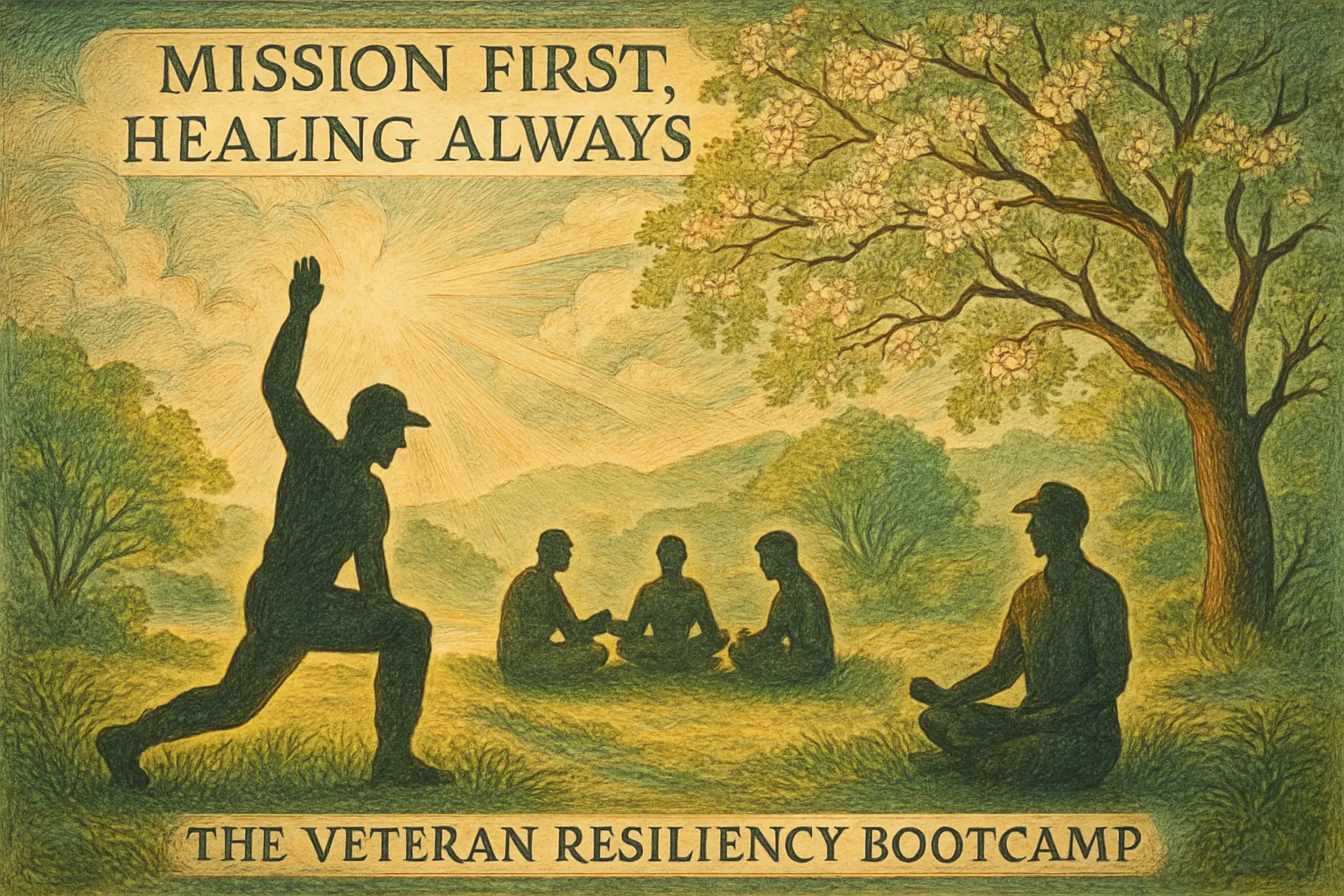
Picture this: You’re a newly separated veteran, standing in your kitchen with a cup of cold coffee, wondering if anything will ever feel as vital as your last deployment. It’s a raw feeling, isn’t it? Now, imagine a place where that sense of mission is not only respected, but becomes the linchpin for rebuilding your civilian life. That’s the promise—and, frankly, the provocation—of the Veteran Resiliency Bootcamp (VRB): a project that flips Maslow’s hierarchy on its head and dares to start with purpose before basics. It’s group healing, but tailored for those who don’t typically trust groups. Let’s peel back the layers of VRB and see what real-world, research-driven resilience looks like—cold coffee not required.
From Battlefields to Bootcamp: Why Mission Still Matters in Civilian Life
For many veterans, the transition from military service to civilian life is marked by a profound sense of unmooring. The military provides a clear structure, a shared sense of identity, and—perhaps most importantly—a mission that gives daily life meaning and direction. When service ends, that mission can vanish overnight, leaving veterans searching for purpose in a world that often feels disconnected from the values and camaraderie of military life.
The Veteran Experience: Unmooring and the Hunger for Purpose
Leaving the military is not just a change of job; it is a seismic shift in identity. Veterans often describe feeling adrift, as if the anchor that once held them steady has been cut loose. The loss of mission can lead to feelings of isolation, anxiety, and even depression. This hunger for purpose is not a weakness—it is a testament to the power of the mission-first mindset that was instilled during service. Recognizing and addressing this need is at the heart of effective veteran support.
VRB’s Core Premise: Mission-First Approach to Healing
The Veteran Resiliency Bootcamp (VRB) is built around a simple but powerful idea: healing begins with purpose. Unlike traditional therapeutic models that start by addressing basic needs, the VRB uses an Inverted Maslow’s Hierarchy, placing mission and purpose at the foundation of recovery. This approach leverages the ingrained mission-first orientation of veterans, helping them to rebuild their lives around a new, personally meaningful objective.
Military Culture’s Strengths: Discipline, Loyalty, and Resourcefulness
Military culture is rich in qualities that can be powerful assets in therapy. Discipline, loyalty, and resourcefulness—traits honed on the battlefield—are directly transferable to the work of healing and growth. The VRB capitalizes on these strengths, using them as building blocks for psychosocial stability and self-efficacy. In the group setting, veterans are encouraged to draw on their collective identity and sense of duty, transforming these values into tools for personal and communal resilience.
Personal Tangent: Reframing Civilian Life as a New Mission
Consider the story of a veteran who excelled as a platoon sergeant, leading his team through high-pressure situations with confidence and clarity. Yet, after leaving the service, he found himself struggling in his first office job, feeling lost and unmotivated. It was only when he reframed his civilian role as a new mission—one that required leadership, problem-solving, and teamwork—that he began to thrive again. This shift in perspective is a core element of the VRB, which guides participants to see civilian challenges not as obstacles, but as opportunities for purposeful engagement.
Why Starting with ‘Purpose’ Aids Post-Traumatic Growth
Research shows that post-traumatic growth is most likely when individuals can find meaning in their experiences. By starting with purpose, the VRB helps veterans to reinterpret their past, integrate their military identity, and set actionable goals for the future. This mission-first approach not only fosters resilience but also encourages veterans to become active agents in their own recovery, rather than passive recipients of care.
The Unexpected Power of a Non-Traditional Hierarchy
The VRB’s use of the Inverted Maslow’s Hierarchy is a radical departure from conventional therapy. Instead of focusing first on physiological or safety needs, the program begins by helping veterans define a new mission. This non-traditional hierarchy resonates deeply with military-trained individuals, who are accustomed to putting the mission above all else. By honoring and harnessing this orientation, the VRB creates a therapeutic environment that feels both familiar and empowering, paving the way for sustained post-traumatic growth.
Inside the VRB Circle: Community Healing, Not Command Chains
The Veteran Resiliency Bootcamp (VRB) stands apart from traditional military or clinical interventions by centering its group work on Restorative Justice Peace Circles. This approach is not just a structural choice—it is a deliberate response to the reality that many post-9/11 veterans carry a deep mistrust of authority. In the VRB, there are no command chains, no rigid hierarchies. Instead, veterans step into a circle where every voice is valued equally, and healing is a shared mission.
Restorative Justice Peace Circles: A Safe Harbor for Authority Mistrust
For veterans who have experienced trauma within strict chains of command, the non-hierarchical nature of Peace Circles offers a unique sense of safety. The Circle Keeper—a licensed or supervised social worker—guides the process, but does not dictate it. This structure is crucial: it allows veterans to let down their guard, knowing that no one in the room holds unchecked power over them. The circle’s format, adapted with clinical containment protocols, ensures that boundaries are clear and safety is prioritized, without reverting to top-down control.
Redefining Brotherhood and Community in Civilian Life
Military service often forges a sense of brotherhood, but this bond can be difficult to replicate after discharge. VRB’s group sessions intentionally rebuild this sense of community, but with a new foundation. Here, ‘brotherhood’ is reimagined as mutual support among equals, not as a chain of command. Veterans are encouraged to share their stories, listen deeply, and recognize shared experiences. This process helps participants see themselves not as isolated individuals, but as members of a resilient, supportive community navigating post-service life together.
Wild Card Moments: The Power of the Check-Out
Each VRB session concludes with a structured Check-Out Procedure—often framed as “Rose, Thorn, Bud, Next Step.” Imagine a session where every participant shares one hope, one regret, and one next step. This ritual is more than a closing activity; it is a moment of vulnerability and connection. By voicing aspirations, struggles, and intentions, veterans practice self-reflection and accountability in a supportive environment. Over time, these check-outs become a cornerstone of trust, helping to break down walls of isolation and silence.
Clinical Containment: Safety Nets Without Hierarchy
While the VRB circle is non-hierarchical, it is not without structure. Strict clinical containment is built into every session. The Circle Keeper is trained to recognize signs of distress and to intervene when necessary, always with respect and transparency. Safety protocols are rehearsed before the program begins and revisited midway, ensuring that the group remains a safe space for all. This balance—firm boundaries without authoritarian control—creates a reliable safety net, allowing veterans to take emotional risks and engage deeply in the healing process.
Addressing Social Isolation Through Shared Story and Community Mapping
Social isolation is a common challenge for veterans transitioning to civilian life. The VRB tackles this head-on through shared storytelling and community mapping. Veterans are invited to share their journeys, both in and out of uniform, fostering empathy and connection. Community mapping exercises help participants identify existing supports and gaps in their social networks. By visualizing these connections, veterans can see pathways to new relationships and resources, reducing feelings of isolation and strengthening their sense of belonging.
Building Long-Term Supports: From VA Navigation to Reciprocal Altruism
VRB’s community phase extends beyond the group itself. Veterans learn practical skills for navigating complex systems like the Department of Veterans Affairs, ensuring they can access the benefits and services they have earned. Just as importantly, the program emphasizes reciprocal altruism—the idea that helping others is a key part of healing. Veterans are encouraged to support one another, building a network of mutual aid that persists long after the 16 sessions end. This approach transforms the circle from a temporary support group into a launchpad for ongoing resilience and growth.
Measuring Growth: Science, Stories, and Mixed-Methods Trials
Evaluating the true impact of the Veteran Resiliency Bootcamp (VRB) requires more than just numbers—it demands a comprehensive approach that captures both measurable change and the lived experiences of veterans. The VRB stands out for its commitment to rigorous, mixed-methods research, ensuring that both scientific data and personal narratives inform its ongoing development and effectiveness.
Quantitative Measures: Tracking Resilience and Growth
At the heart of VRB’s evaluation is a robust quantitative framework. Two gold-standard instruments are used:
- Connor-Davidson Resilience Scale (CD-RISC): This tool assesses changes in resilience—the ability to bounce back from adversity—across the program timeline.
- Posttraumatic Growth Inventory (PTGI): This scale measures the positive psychological change that can occur after trauma, such as new appreciation for life or improved relationships.
Both the Immediate Treatment Group (ITG) and the Waitlist Control Group (WLCG) complete these assessments at three critical points:
- Pre-test (T1): Before the first session, establishing a baseline.
- Post-test (T2): After the 16th session, to gauge immediate impact.
- 6-Month Follow-Up (T3): To assess sustained growth and resilience.
Statistical analysis, specifically Repeated Measures ANOVA, is used to compare changes over time and between groups. This design provides strong evidence for the effectiveness of VRB, even when working with small cohorts—a common reality in veteran-focused interventions.
Qualitative Insights: Stories of Transformation
While numbers matter, they cannot capture the full depth of transformation. That’s why VRB integrates qualitative research through thematic interviews and narrative analysis. Veterans share their stories in their own words, revealing how the program has shaped their sense of purpose, identity, and community.
Thematic analysis uncovers recurring patterns and unique journeys, highlighting shifts in self-concept, relationships, and coping strategies. These stories often reveal subtle changes missed by quantitative tools—such as a renewed sense of belonging, or the courage to seek help for the first time. By honoring these narratives, VRB ensures that the “why” and “how” of growth are as visible as the “how much.”
What Most Programs Miss—And VRB Captures
Many veteran programs rely solely on surveys or checklists, missing the deeper meaning behind the numbers. VRB’s mixed-methods approach bridges this gap. Quantitative data demonstrates statistically significant improvements, while qualitative stories provide context and depth. This dual lens not only validates the program’s impact but also guides ongoing refinement, ensuring that interventions remain relevant and responsive to veterans’ real-world needs.
Waitlist Controlled Trial: Ensuring Scientific Rigor
The use of a Waitlist Control Group (WLCG) adds a crucial layer of scientific rigor. Veterans in the WLCG complete all assessments while waiting to join the program, serving as a comparison group for those receiving immediate treatment. This design helps control for external factors and ensures that observed changes are truly due to the VRB intervention—not just the passage of time or outside influences. Even with small groups, this approach strengthens the validity of the findings and supports broader advocacy for the program’s adoption.
A Tangible Example: The Power of the 6-Month Follow-Up
One of the most compelling findings emerged during a 6-month follow-up interview. A participant who had shown only modest improvement at post-test described a profound shift in his outlook and daily life months after the program ended. He credited the VRB’s mission-first framework and community support for helping him secure stable housing, reconnect with his family, and pursue a new career path. This transformation, captured through both quantitative scores and a powerful personal narrative, underscores the importance of long-term, mixed-methods evaluation in truly measuring post-traumatic growth.
Beyond CBT: Layered Therapies for Lasting Change
The Veteran Resiliency Bootcamp (VRB) stands apart from traditional trauma interventions by moving beyond a single therapeutic lens. Rather than relying solely on cognitive-behavioral therapy (CBT), the VRB integrates multiple evidence-based approaches—CBT, dialectical behavior therapy (DBT), strengths perspective, and ecological perspective—into a cohesive, layered model. This integration is not about competition between modalities, but about harnessing the best of each to address the complex realities veterans face during the transition to civilian life.
Integration, Not Competition: A Multi-Modal Foundation
CBT and DBT are embedded within the VRB curriculum to provide veterans with practical skills for distress tolerance, emotional regulation, and cognitive restructuring. However, these are not presented as isolated techniques. Instead, they are woven into a strengths-based and group-centered context, leveraging the discipline, resourcefulness, and collective identity that veterans bring from their military experience. The ecological perspective ensures that each participant’s environment—social, economic, and physical—is considered in the healing process.
VRB’s Six-Phase, 16-Session Curriculum
The VRB is meticulously structured into six distinct phases, each building on the last to foster deep, lasting change:
- Phase I: Foundation & Safety – Establishes trust, safety, and trauma-informed group norms.
- Phase II: Mission – Helps veterans define a new civilian mission and align values.
- Phase III: Self-Concept – Focuses on identity mapping and goal-setting using SMART and K.I.S.S. frameworks.
- Phase IV: Community – Rebuilds social support networks and teaches navigation of complex systems.
- Phase V: Mission Readiness – Delivers skills for psychological and physiological stability, including sleep, nutrition, and resource acquisition.
- Phase VI: Integration & Future – Synthesizes learning, plans for relapse prevention, and celebrates achievements.
Each session, lasting 90 to 120 minutes, ends with a structured “Check-Out” to reinforce progress and set intentions for the next step.
Resource Mapping: Basic Needs as Mission-Critical
A defining feature of the VRB is its commitment to resource mapping. Unlike many interventions that treat housing, financial stability, or access to healthcare as secondary concerns, VRB recognizes these as foundational. Veterans are taught that securing these resources is not “extra”—it is essential mission groundwork. By addressing these needs early and systematically, the program ensures that participants are not distracted by survival concerns and can fully engage in psychological growth.
Personal Anecdote: SMART Goals Beyond the Battlefield
One VRB participant, a former squad leader, shared a breakthrough during a group session: “I always thought SMART goals were just for mission planning. But when I used them for my sleep routine—breaking it down, tracking progress—it actually worked. I realized the same discipline I used in the field could help me get a decent night’s rest.”
This moment highlights how the translation of military skills to civilian self-care is a core strength of the VRB approach.
Strengths-Based and Group-Based Approaches: Building Self-Efficacy
The VRB’s group format, grounded in adapted Restorative Justice Peace Circles, creates a safe, non-hierarchical space where veterans can rebuild trust in others and themselves. The strengths-based perspective empowers participants to recognize and apply their existing capabilities—discipline, teamwork, and problem-solving—to new life challenges. Through shared experiences and mutual support, self-efficacy grows, making change feel possible and sustainable.
Layered Readiness: Preparing for Real-World Challenges
Each phase of the VRB curriculum is designed to build readiness for the next, layering skills and insights so that participants are not only prepared for immediate post-traumatic growth but also equipped to handle future setbacks. This layered approach ensures that healing is not a one-time event, but an ongoing process rooted in practical skills, community support, and a renewed sense of mission.
What Ethics Really Look Like: Trust, Boundaries, and Duty When Stakes Are High
In the context of the Veteran Resiliency Bootcamp (VRB), ethics are not just a set of rules—they are the backbone of every session, every interaction, and every decision. The stakes are high: participants commit to a rigorous, 16-session journey designed to foster post-traumatic growth and resilience. This extended engagement demands ethical protocols that are not only robust but also responsive to the unique needs and lived experiences of post-9/11 veterans.
High Stakes: Why Ironclad Ethical Protocols Matter
A 16-session intervention is not a typical group therapy commitment. Veterans bring with them a history of service, trauma, and often, a deep-seated mistrust of authority. The VRB’s structure—spanning four months—means that trust must be built and maintained over time. Ethical lapses are not just procedural missteps; they can undermine the entire process, erode group cohesion, and even retraumatize participants. As a result, the VRB implements ironclad ethical protocols from the outset, with clear expectations for both facilitators and participants.
Circle Keeper Qualifications: Expertise and Vigilance
The role of the Circle Keeper is pivotal. Only Licensed Master Social Workers (LMSWs) or Master of Social Work (MSW) candidates under direct, weekly clinical supervision are eligible to facilitate. This ensures that every group is led by someone with advanced clinical training and a deep understanding of trauma-informed care. Before the first session and again midway through the program, facilitators conduct safety protocol drills. These drills are not mere formalities—they are essential rehearsals for managing crises, maintaining boundaries, and ensuring the psychological safety of every participant.
Informed Consent: An Ongoing Dialogue
In the VRB, informed consent is not a one-time signature on a form. Instead, it is an ongoing conversation, revisited at three critical points: Session 1, Session 9, and Session 16. This approach recognizes that veterans’ understanding of the process, their rights, and the implications of participation may evolve over time. The consent process addresses not only the therapeutic aspects but also the research components of the program, including the impact of early withdrawal on both personal progress and study validity.
Confidentiality Boundaries: Duty to Warn in a Post-War Context
Confidentiality is a cornerstone of any therapeutic relationship, but for veterans, the boundaries are often more complex. Many have experienced environments where secrecy was a matter of survival, and breaches could have life-or-death consequences. In the VRB, the concept of Duty to Warn is discussed openly and revisited at multiple points. Facilitators clarify that while most group disclosures remain confidential, certain situations—such as threats of harm to self or others—require mandatory reporting. This transparency is essential for building trust, especially among those who may be wary of institutional authority.
The Graduation Circle: Vulnerability and Lasting Bonds
A unique aspect of the VRB is the graduation circle at the end of the 16 sessions. Here, participants often share moments of vulnerability that have been building throughout the program. For many veterans, this is the first time they have felt safe enough to express deeply held emotions in a group setting. These moments are not only therapeutic but also serve to solidify the bonds formed during the bootcamp, creating a sense of community that can last long after the program ends.
The Containment Paradox: Freedom Within Structure
One of the most profound ethical insights from the VRB is the containment paradox: strict protocols do not limit freedom; they enable it. By establishing clear boundaries, safety drills, and transparent expectations, the program creates a secure environment where veterans can take emotional risks, explore new identities, and rebuild trust. The restorative justice peace circle format, with its non-hierarchical structure and clinical containment, offers a rare blend of safety and autonomy—precisely what is needed for genuine post-traumatic growth.
‘Mission Complete?’: Integration, Graduation, and Life After Bootcamp
Weaving Together Mission, Identity, and Practical Gains
The final phase of the Veteran Resiliency Bootcamp (VRB) is more than a simple conclusion—it is a deliberate integration of every lesson, skill, and insight gained over the previous 15 sessions. By Session 16, veterans have not only explored their new civilian mission but have also redefined their sense of self and mapped out practical steps for stability. This phase is designed to help participants synthesize their experiences, ensuring that the journey from military to civilian life is anchored in both meaning and actionable plans.
The VRB’s unique structure, rooted in the Inverted Maslow’s Hierarchy, ensures that higher-order needs—like purpose and belonging—are not afterthoughts but the very foundation upon which practical gains, such as housing and employment, are built. Each participant leaves with a personalized roadmap that connects their new mission to daily routines, relationships, and long-term goals.
Relapse Prevention: Built-In, Not Bolted On
Relapse prevention is not a single session or worksheet in the VRB; it is a thread woven throughout the entire curriculum. From the first session’s focus on safety and trust, to the final integration phase, participants are taught to anticipate setbacks, recognize early warning signs, and develop concrete strategies for self-correction. The “Check-Out Procedure” at the end of every session—using the “Rose, Thorn, Bud, Next Step” framework—encourages ongoing reflection and planning, making relapse prevention a living practice rather than a distant goal.
By normalizing the ups and downs of transition, VRB helps veterans see challenges not as failures, but as opportunities for continued growth. This approach is reinforced in the final session, where each participant crafts a personalized relapse prevention plan and shares it with the group, reinforcing accountability and mutual support.
The Graduation Commitment Ceremony: Ritual and Renewal
The VRB’s graduation is far more than a formality. Drawing on both military traditions and restorative justice practices, the commitment ceremony is a powerful ritual that marks the transition from participant to graduate. Each veteran is invited to share their journey, acknowledge their achievements, and publicly commit to their new mission in civilian life.
Research shows that such rituals can have a profound psychological impact, helping individuals internalize change and signal readiness for new chapters. The ceremony also strengthens group bonds, as graduates are welcomed into an ongoing alumni network, reinforcing the sense of community and shared purpose that is central to the VRB model.
Anecdote: The Cycle of Growth Continues
One VRB graduate, after completing the program, returned six months later—not as a participant, but as a mentor. Sitting in the familiar peace circle, he shared his story with new members, offering practical advice and hope. His presence was a living example of post-traumatic growth: by helping others, he deepened his own healing and sense of purpose. This cycle of giving back is a hallmark of the VRB, and many alumni choose to stay involved, creating a ripple effect of resilience and support.
Six-Month Check-Ins: Surprising Outcomes
The VRB’s commitment to long-term impact is reflected in its rigorous follow-up. At the six-month mark, participants complete the CD-RISC and PTGI assessments again, providing valuable data on sustained resilience and growth. These check-ins often yield surprising results—veterans who initially struggled may report significant gains, while others discover new challenges that prompt further engagement with resources. Facilitators use this feedback to refine the program and offer targeted support, ensuring that growth does not end at graduation.
What Civilian Life Can Learn: A Blueprint for Resilience
The VRB’s structured, mission-driven approach offers lessons far beyond the veteran community. Imagine a “civilian resilience bootcamp” for career changers, parents, or retirees—groups facing major life transitions and identity shifts. By focusing on purpose, community, and practical skills, such a program could help anyone navigate change with confidence. The VRB model demonstrates that with the right structure and support, post-traumatic growth is not just possible, but repeatable—even outside the military context.
Big Picture: Could the VRB Model Change How We Heal?
The Veteran Resiliency Bootcamp (VRB) stands at the crossroads of military culture, clinical innovation, and rigorous research. As a comprehensive, manualized group intervention, VRB is not just another therapy program—it is a gold-standard model that reimagines how post-traumatic growth and resilience can be fostered among veterans. Its unique blend of military-informed language, restorative justice practices, and a research-backed curriculum positions it as a potential blueprint for trauma healing programs far beyond the veteran community.
At the heart of VRB’s innovation is its use of restorative justice peace circles, adapted to meet the clinical needs of veterans. This non-hierarchical, trust-building group format is a marked departure from traditional therapy groups, which often rely on authority-driven models. By creating a space where every participant’s voice holds equal weight, VRB addresses the deep-seated mistrust that many veterans feel toward authority figures after their service. This model could inform broader trauma healing programs, especially for populations that have experienced institutional betrayal or systemic trauma. The peace circle approach, combined with strict clinical containment, ensures both psychological safety and genuine connection—two pillars essential for meaningful healing.
Another key innovation is VRB’s theoretical foundation: the Inverted Maslow’s Hierarchy of Needs. Rather than starting with basic physiological needs, VRB begins with the veteran’s sense of mission and purpose. This approach leverages the ingrained “mission-first” mindset of military culture, reframing the healing journey as a new mission rather than a treatment or recovery process. This shift in language is not just semantic; it is transformative. Veterans are more likely to engage deeply when their strengths, values, and identities are honored. The concept of “mission” resonates far more than “treatment,” reducing stigma and fostering buy-in from participants who might otherwise resist traditional mental health interventions.
The VRB model’s rigorous research design further elevates its credibility. By employing a Mixed-Methods Randomized Controlled Trial with both quantitative and qualitative measures, VRB provides robust evidence of its impact on resilience and post-traumatic growth. The use of validated tools like the CD-RISC and PTGI, along with thematic analysis of participant experiences, ensures that both statistical outcomes and personal narratives inform the program’s ongoing refinement. This level of research rigor is rare in community-based interventions and sets a new standard for trauma-informed care.
The potential for scalable adoption of the VRB model is significant. Its manualized, phase-based curriculum can be replicated across veteran service organizations nationwide, with clear guidelines for facilitator training, ethical safeguards, and clinical supervision. The program’s structure—16 sessions over four months—allows for deep, sustained engagement, while the group format maximizes reach and cost-effectiveness. As more veterans transition to civilian life, the need for culturally competent, evidence-based interventions like VRB will only grow.
Reflecting on the VRB experience raises a profound question: What if all healing spaces began by asking, “What drives you?” Instead of focusing first on deficits or symptoms, what if programs started with purpose, strengths, and community? VRB demonstrates that when healing is framed as a mission, participants become active agents in their own growth, rather than passive recipients of care. This strengths-based, mission-driven approach could transform not only veteran services, but also trauma recovery programs for first responders, survivors of violence, and others navigating life after adversity.
Ultimately, the VRB model is a call for cross-sector collaboration. Its success points to the power of integrating military cultural strengths, restorative justice principles, and clinical best practices. As a blueprint for trauma-informed, resilience-focused care, VRB challenges practitioners, policymakers, and communities to rethink how we support those who have served—and how we might reimagine healing for all who have endured trauma. The future of trauma recovery may well begin with a simple question: What is your mission now?
TL;DR: The Veteran Resilience Bootcamp (VRB) reshapes trauma recovery by fusing mission-centric, strengths-focused group therapy with restorative justice, tailored assessment, and a bold new approach to post-9/11 veteran mental health. Its impact? Lasting personal growth, renewed purpose, and a blueprint for veteran-centered care.