Peeled Back: How 'Hanoi Jane' Stickers Cloud Veteran Mental Health Progress in VFW and American Legion Halls
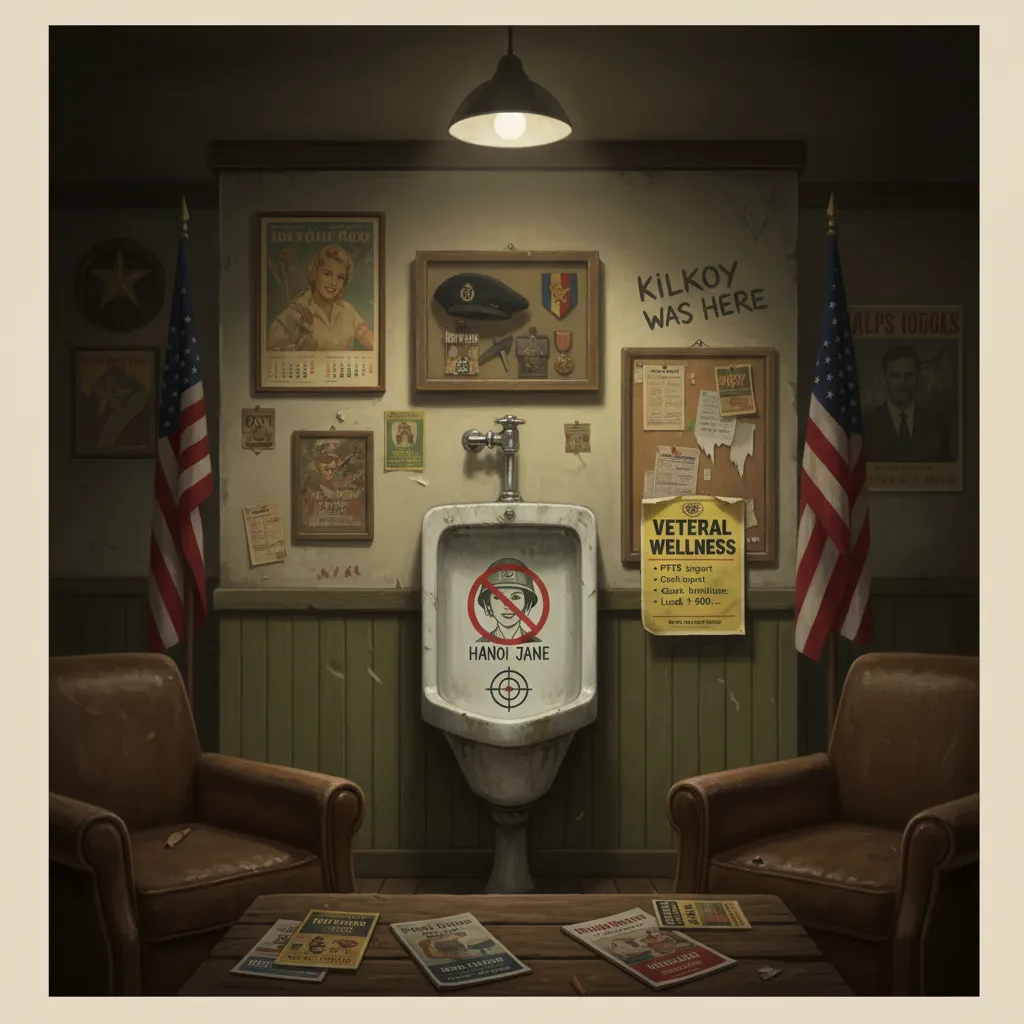
It’s probably safe to say most folks don’t expect a trip to the men’s bathroom at a local VFW post to spark a reckoning with America’s past. Yet, a few years back, a friend (let’s call him Dave) told me about seeing a battered ‘Hanoi Jane’ urinal sticker during a community event. For Dave, a Vietnam vet, the sticker was more than a curious relic—it brought back heated debates, old wounds, and that familiar tension in the air few outsiders ever sense. Why do these stickers still show up? More importantly, what do they do to today’s conversations about mental health in places supposed to be safe havens for all veterans? Let’s wade through the nostalgia, the grudge, and—yes—the urinal, to see what’s standing in the way of progress.
Bathroom Graffiti: Why 'Hanoi Jane' Still Lingers in Veteran Spaces
Step inside almost any VFW or American Legion hall across the country, and you might spot a familiar, controversial sticker in the bathroom: a black-and-white image of Jane Fonda, often captioned with harsh words or symbols. For many, these “Hanoi Jane” stickers are more than just bathroom graffiti—they are a window into the complex emotions that still ripple through veteran communities.
Dave’s Story: Discomfort in a Familiar Place
Dave, a Vietnam veteran, describes a recent visit to his local VFW. He was looking forward to the camaraderie and comfort he usually found there. But when he entered the restroom, his eyes landed on a “Hanoi Jane” sticker pasted above the urinal. Instantly, the atmosphere changed. A heavy silence seemed to settle over the room. Dave felt a mix of anger, sadness, and isolation. He realized that, even decades later, the wounds of the Vietnam War—and the controversy around Jane Fonda’s 1972 visit to Hanoi—were still fresh for many.
“I just wanted to wash my hands and talk to my buddies,” Dave recalls. “But seeing that sticker, it was like the past was staring right at me. Nobody said a word, but everyone saw it.”
Stickers as Nostalgia and Protest
For some veterans, these stickers serve as a badge of unity and a reminder of shared outrage. Jane Fonda’s visit to North Vietnam during the war, and her public criticism of U.S. involvement, sparked intense anger among many service members. The stickers became a way to express that anger and to protest what they saw as betrayal. Over time, the image of “Hanoi Jane” has become a kind of shorthand for the pain, confusion, and anger that many veterans still feel about the war and its aftermath.
- Nostalgia: For some, the stickers recall a time when veterans felt united by a common cause—even if that cause was anger or protest.
- Protest: The stickers are a way to keep the memory of perceived betrayal alive, serving as a warning to outsiders and a rallying point for those who share the same feelings.
Unity for Some, a Wall for Others
While “Hanoi Jane” stickers may foster a sense of unity for some veterans, they can also create invisible barriers. Veterans like Dave, who want to move forward and focus on healing, often find these symbols to be painful reminders of old wounds. For newer generations of veterans, or those who do not share the same anger, the stickers can make veteran spaces feel unwelcoming or stuck in the past.
The presence of these stickers can lead to a kind of “leaden silence,” where difficult topics are avoided rather than discussed. This silence can make it harder for veterans to talk openly about mental health, trauma, and the challenges they face today.
Shorthand for Complex Emotions
The “Hanoi Jane” sticker has become more than just a protest against one person. It is a symbol loaded with meaning—betrayal, trauma, and misunderstood history all wrapped into a single image. For some, it is a way to express feelings that are too difficult to put into words. For others, it is a constant reminder of a past they would rather leave behind.
In this way, bathroom graffiti like the “Hanoi Jane” sticker continues to shape the atmosphere in veteran halls. It reflects the ongoing struggle to balance remembrance and healing, unity and division, protest and progress.
Stigma in the Halls: How Old Grievances Block New Conversations about Veteran Mental Health
Veterans’ organizations like the VFW and American Legion were founded to foster camaraderie, support, and healing among those who have served. Yet, in many halls across the country, old grievances and symbols—such as the infamous “Hanoi Jane” stickers—continue to cast a long shadow over new conversations about mental health. The irony is clear: places meant for unity and understanding sometimes nurture exclusion and silence, especially when it comes to the evolving needs of younger veterans.
The Irony of Camaraderie and Exclusion
The very spaces designed to bring veterans together can unintentionally become barriers to open dialogue. Symbols like the “Hanoi Jane” sticker, which references Jane Fonda’s controversial actions during the Vietnam War, are more than just relics of the past. They serve as reminders of deep wounds and betrayals, but they also signal to newer generations of veterans that certain topics—and even certain people—are not welcome. This creates an environment where exclusion is nurtured, not camaraderie.
For many younger veterans, these symbols and stories are not just history lessons; they are warnings. The message is clear: loyalty is measured by old standards, and toughness is prized above vulnerability. In this atmosphere, discussing mental health struggles can feel like breaking an unspoken code.
Anecdote: The Quiet Hesitation of Younger Veterans
Consider the experience of a young Iraq War veteran who walks into a VFW hall for the first time. He sees the “Hanoi Jane” sticker above the urinal and hears stories of betrayal and toughness echoing through the room. He wants to talk about his struggles with anxiety and nightmares, but he hesitates. He worries that admitting to mental health challenges will be seen as weakness or, worse, as disloyalty to the brotherhood. Instead of finding support, he quietly keeps his distance, unsure if he truly belongs.
This scenario is not unique. Many younger veterans report feeling unwelcome or judged in traditional veterans’ spaces. The expectation to conform to old ideas of toughness and loyalty creates a “litmus test” that discourages open discussion about mental health. The result is a culture where silence is safer than honesty, and where those who need help the most are often the least likely to seek it.
Lingering Controversy and Its Impact on Culture
The ongoing presence of controversial symbols and stories does more than just remind veterans of past divisions; it actively shapes the culture of these halls. When the tone is set by lingering grievances, it becomes difficult to introduce new ideas or suggest changes to mental health care policies. Members who might otherwise advocate for improved support or resources may hold back, fearing backlash or accusations of disrespecting tradition.
This environment not only affects individual veterans but also influences organizational priorities. When conversations about mental health are stifled, progress stalls. Opportunities to update care policies, expand outreach, or create more inclusive programming are lost. The cycle continues, with old grievances blocking the path to new solutions.
- Irony: Spaces intended for support can become sites of exclusion due to persistent symbols and stories.
- Anecdote: Younger veterans often feel hesitant to discuss mental health, fearing judgment tied to outdated notions of toughness and loyalty.
- Lingering Controversy: The culture set by old grievances impacts both the willingness to seek help and the ability to advocate for better mental health care.
As long as these old grievances and symbols remain unexamined, the halls that should be places of healing may continue to reinforce silence and stigma, making it harder for all veterans to get the support they need.
Symbols Create Walls: The Surprising Impact of 'Hanoi Jane' Stickers on Veteran Support Services
In VFW and American Legion halls across the country, the presence of “Hanoi Jane” stickers—often found on bathroom urinals or walls—has become more than just a relic of Vietnam-era anger. These symbols, meant to express outrage at Jane Fonda’s controversial actions during the Vietnam War, have evolved into silent gatekeepers, shaping the atmosphere and interactions within veteran communities. Their impact on mental health progress and support services is far-reaching, often in ways that surprise even long-time members.
When Symbols Freeze Conversations
Leaders and members of veteran halls have shared stories about how these stickers can instantly change the tone of a room. One VFW post commander recalled a time when a young Iraq War veteran entered the hall for the first time. As he headed to the restroom, he paused at the sight of the “Hanoi Jane” sticker on the urinal. Later, during a group discussion about PTSD, the newcomer hesitated to share his experiences, saying, “I just felt like I wasn’t sure this place was for me. Like maybe my war wasn’t the right kind.”
Another American Legion member recounted a similar moment:
“We were talking about starting a peer support group, but as soon as someone brought up the sticker, the conversation stopped. Nobody wanted to touch the subject. It was like the sticker was telling us what was okay to talk about—and what wasn’t.”
Gatekeeping Through Decals
For some veterans, these stickers are more than a protest—they are a form of gatekeeping. The message is subtle but clear: there is a “right” kind of veteran, and a “right” kind of pain. Veterans from more recent conflicts, or those with invisible wounds, sometimes feel excluded. As one Gulf War veteran put it, “It’s like the sticker is a password. If you don’t get the anger, maybe you don’t belong.”
This sense of exclusion can have real consequences. Veterans who feel unwelcome or judged are less likely to seek help, open up about their struggles, or participate in support programs. The very symbols meant to honor one group’s experience can unintentionally silence another’s.
Imagining a Different Welcome
Consider a different scenario: what if, instead of a divisive sticker, every new veteran was greeted with a “Welcome Home” decal at the door? The atmosphere could shift from one of suspicion or defensiveness to one of openness and support. Members might feel encouraged to share their stories, regardless of which war they fought or which wounds they carry.
This “wild card” idea is not just wishful thinking. Some posts have experimented with more inclusive symbols and found that it changes the dynamic. One post in the Midwest replaced their urinal stickers with a mural honoring all generations of veterans. According to their commander, “We saw more young vets coming in, and the conversations got a lot more honest.”
Debate: Remove or Retain?
The presence of “Hanoi Jane” stickers is a subject of ongoing debate within veteran organizations. Some argue that these symbols are an important reminder of history and a way to honor the pain of Vietnam veterans. Others believe that clinging to these reminders blocks progress, especially when it comes to mental health care and peer support.
- Proponents say the stickers are a form of free expression and a way to keep history alive.
- Opponents argue that they create unnecessary barriers and discourage veterans from seeking help.
As more veterans from recent conflicts join these halls, the question remains: should posts remove these reminders, or do they still serve a purpose? The answer may shape the future of veteran support services for years to come.
Rethinking Traditions: How VFW and American Legion Halls Can Evolve Beyond Controversy
For decades, VFW and American Legion halls have served as gathering places for veterans to share camaraderie, honor service, and support one another. Yet, as highlighted in “The Urinal Test: Why 'Hanoi Jane' Stickers Block Progress on Veteran Mental Health Care in VFW and American Legion Halls,” some longstanding symbols and rituals—like the infamous “Hanoi Jane” stickers—can unintentionally create barriers for today’s diverse veteran community. As the veteran population changes, so too must the traditions that shape these spaces. Rethinking what is displayed on the walls and how stories are told can help these halls become more inclusive and supportive for all generations of veterans.
Fostering Inclusive Symbols and Practices
One of the most effective ways for veteran halls to move beyond controversy is by adopting symbols and rituals that reflect the full spectrum of military service. Some posts have already taken steps in this direction by replacing divisive imagery with murals or tribute walls that honor veterans from all eras and backgrounds. For example:
- Murals Depicting Multiple Conflicts: Instead of focusing on a single war or controversial figure, some halls have commissioned murals that feature scenes from World War II, Korea, Vietnam, the Gulf War, and recent conflicts in Iraq and Afghanistan. This approach visually communicates that every veteran’s service matters.
- Tribute Walls: Posts in several states have created tribute walls where members can display photos, medals, or memorabilia from their own service or that of loved ones. These walls become living histories, encouraging conversation and connection across generations.
- Inclusive Rituals: Updating opening ceremonies to include moments of silence for all who served, regardless of era or branch, helps foster a sense of unity and respect.
By shifting the focus from controversial symbols to inclusive ones, posts can create a welcoming environment that supports mental health and encourages veterans to seek help when needed.
Broadening What’s Remembered and Honored
Some may worry that removing or replacing traditional symbols means erasing history. However, creating a shared space is not about forgetting the past—it’s about broadening what is remembered and honored. As one veteran put it:
“We’re not erasing anyone’s experience. We’re making room for everyone’s story to be told.”
This approach allows for honest conversations about the complexities of war, the challenges of coming home, and the ongoing struggles many veterans face. It also helps break down the stigma around mental health by showing that every veteran’s journey is valid and worthy of respect.
Anecdote: Stories Beyond the War
One inspiring example comes from a VFW post in Illinois. After a heated debate about the presence of “Hanoi Jane” stickers, the leadership decided to try something new. They launched a monthly event called Stories Beyond the War, inviting veterans of all ages to share personal stories—not just about combat, but about life before and after service, family, and the challenges of transitioning to civilian life.
The results were surprising. Older Vietnam veterans found common ground with younger Iraq and Afghanistan vets over shared experiences of loss and resilience. Family members and community leaders attended, deepening understanding and support. The event became so popular that the post began recording the stories for a local oral history project, ensuring that every voice was heard and valued.
By rethinking traditions and embracing inclusive practices, VFW and American Legion halls can move beyond controversy, creating spaces where all veterans feel seen, heard, and supported.
Conversation Starters: Moving Past Stickers and Towards Real Connection
Inside the familiar walls of VFW and American Legion halls, the presence of a “Hanoi Jane” sticker—often found in unexpected places like the bathroom sink or above a urinal—can create a moment of discomfort. For some, it’s a reminder of deep wounds and unresolved anger. For others, especially younger veterans or visitors, it’s a confusing symbol that seems out of place in a space meant for camaraderie and healing. But what if these awkward moments could become the very starting point for honest conversations about veteran mental health, forgiveness, and the future of these vital communities?
According to insights from “The Urinal Test: Why ‘Hanoi Jane’ Stickers Block Progress on Veteran Mental Health Care in VFW and American Legion Halls,” these stickers do more than just mark territory—they freeze the conversation in time. Instead of encouraging dialogue, they often shut it down. Veterans who might otherwise share their struggles or seek support may feel judged or unwelcome, especially if their views on the Vietnam War or Jane Fonda’s actions differ from the prevailing sentiment. The sticker becomes a silent barrier, reinforcing old divisions and making it harder to move forward.
However, these moments of discomfort—like noticing that controversial sticker by the sink—can also be powerful openings for real connection. When someone asks, “What’s the story behind that sticker?” it can lead to a deeper discussion about the pain, betrayal, and anger that many Vietnam veterans still carry. It can also open space for younger veterans to share their own experiences with stigma and misunderstanding. In this way, the sticker becomes not just a symbol of the past, but a doorway to healing in the present.
To move beyond the silence, VFW and American Legion posts can experiment with new ways to spark conversation and build trust. One idea is to host story circles, where veterans of all generations are invited to share their personal stories in a respectful and supportive setting. These circles can help break down barriers, allowing members to see each other as individuals rather than as representatives of a particular era or viewpoint.
Another approach is to organize facilitated listening sessions. In these sessions, a trained moderator guides the group through difficult topics—like the legacy of the Vietnam War or the impact of controversial symbols—while ensuring that everyone has a chance to speak and be heard. By focusing on listening rather than debating, these sessions can help build empathy and understanding, even among those who strongly disagree.
A more creative idea is the ‘Sticker Swap’ campaign. Instead of removing the “Hanoi Jane” stickers in silence or replacing them with equally divisive images, posts could invite members to design and share new stickers that reflect their hopes for the future. These new symbols could celebrate unity, resilience, or the ongoing journey of healing. The act of swapping out old stickers for new ones could become a ritual of reflection and renewal, helping the community move forward together.
Imagine, as a wild card, if Jane Fonda herself visited a VFW post in 2024. How might members respond? Would old wounds flare up, or could her presence spark a conversation about forgiveness and growth? Such a visit would undoubtedly be challenging, but it could also teach valuable lessons about the power of dialogue and the importance of facing the past with honesty and compassion.
In the end, moving past stickers means choosing connection over division. By turning awkward moments into opportunities for honest conversation, VFW and American Legion halls can become places where all veterans feel seen, heard, and supported. The journey is not easy, but it is essential for the mental health and future of these communities.
TL;DR: Symbols from the past—especially the ‘Hanoi Jane’ stickers—still influence how veteran halls approach mental health care. Tackling these lingering barriers isn’t just about removing decals; it’s about clearing the path for open, stigma-free support for all who served.