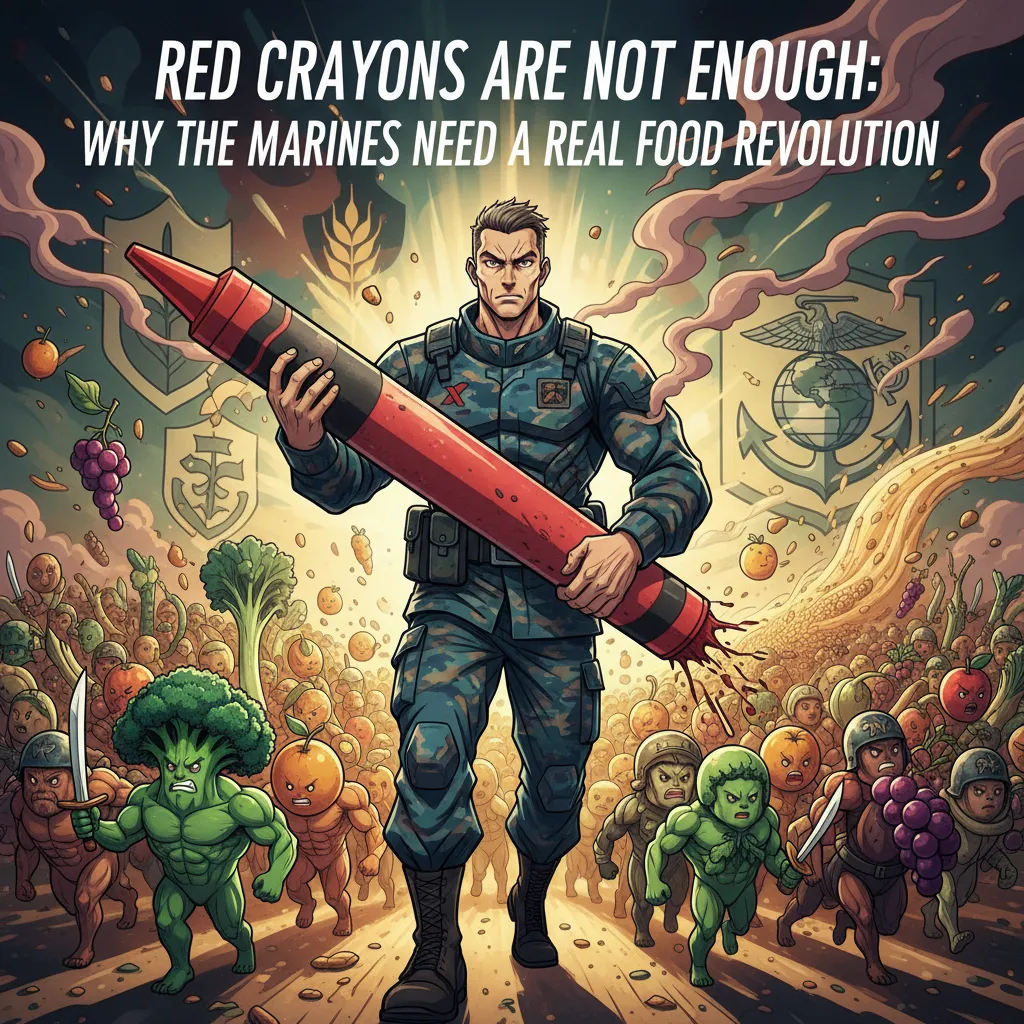
Back in boot camp, I learned three things: how to march in sync, how to field-strip a rifle, and (perhaps most importantly) that Marines supposedly love eating crayons. Spoiler alert: Most of us prefer a decent meal over swallowing chunks of wax, regardless of what the memes say. But here’s the not-so-funny part—the Marine Corps food policy still hasn’t caught up with what today’s Marines need. If we want to win battles (and maybe a few cooking contests), it’s about time we rethink the crayon diet—starting with more protein, fewer sugar cubes, and maybe a blue crayon on the side, just for fun.
Confessions of a (Reluctant) Crayon Connoisseur: Marines and the Myth of Wax-Based Nutrition
Let’s get one thing straight: I never set out to become a crayon connoisseur. But somewhere between the third week of boot camp and the fifth hour of standing in line for chow, I found myself staring down the business end of a red crayon. “Bet you won’t eat it,” a fellow recruit whispered, eyes glinting with the kind of mischief only sleep deprivation and institutional food can inspire. Spoiler alert: I did. It tasted like regret, broken dreams, and a hint of kindergarten nostalgia. And yet, in that moment, I became part of a proud, if slightly waxy, Marine tradition.
The “Marines eat crayons” joke has gone from inside barracks banter to full-blown national meme status. I’ve seen it on t-shirts, mugs, and even a birthday cake once (don’t ask). But here’s the thing—when your branch’s culinary reputation is built on the idea that you’d rather eat art supplies than what’s on your tray, maybe it’s time to take a closer look at what’s actually being served.
Sure, we laugh about it. “Crayons for lunch!” we say, as if it’s just another day in the world’s most elite fighting force. But behind the humor is a very real problem: the food situation in Marine Corps mess halls is, to put it kindly, in need of a revolution. If you’re making wax jokes at every meal, your food might need more help than a fresh coat of paint.
What’s Actually on the Trays?
Let’s set the record straight—actual crayons are not on the menu (at least, not officially). But what is? Picture this: trays lined with mystery meat, limp vegetables, and enough starch to build a small fort. Protein? Sometimes. Fresh produce? If you’re lucky. And don’t get me started on the “continental breakfast,” which usually means a sad banana and coffee that tastes like it’s been filtered through a boot.
- Protein deficit: Most meals are heavy on carbs and light on the stuff that actually builds muscle.
- Sugar overload: If it’s not the main course, it’s hiding in the drinks or snacks.
- Freshness optional: Vegetables are often more “historical artifact” than “farm fresh.”
- Morale impact: When the chow line is a running joke, it’s hard to feel like you’re part of an elite team.
So yes, we joke about eating crayons. But the truth is, Marines deserve better than wax-based nutrition and culinary punchlines. If the only thing standing between you and hunger is a box of Crayolas, it’s time for the Marine Corps to rethink what’s on the tray—and maybe add a side of blue.
Red, Blue, and Everything in Between: The Case for a Crayon-Colorful (and Nutrition-Forward) Menu
Let’s be honest: if the Marine Corps food pyramid was a box of crayons, it would be 90% red, a few broken yellows, and maybe—if you’re lucky—a single, lonely blue. The current reality? Our chow halls are still dishing out sugar-heavy, processed foods that would make even a preschooler’s lunchbox blush. Sure, Marines are tough enough to eat red crayons, but even the bravest Devil Dog can’t survive on wax and high fructose corn syrup alone.
Now, imagine if our rations were as diverse as the crayon box. What if, instead of the same old beige mystery meat and neon Jell-O, we had meals that looked like a rainbow—lean proteins, fresh greens, vibrant veggies, and, yes, a side of blue (blueberries, anyone?). I’m not saying we should start serving unicorn toast, but a little color never hurt anyone—except maybe the guy in charge of food procurement.
The Current Reality: Sugar, Sugar Everywhere
Let’s face it: the Marine Corps menu is still stuck in the era of “if it ain’t broke, don’t fix it”—except, spoiler alert, it is broke. We’re fueling our force with processed carbs, sugary snacks, and enough salt to preserve a Humvee. The result? Energy crashes, sugar highs, and a chow line that looks more like a Halloween candy swap than a fueling station for America’s finest.
Blue Crayons: The Hypothetical Solution
Picture this: every Marine gets an extra blue crayon (or, you know, a serving of real food that isn’t red or beige) at every meal. Suddenly, our plates are filled with lean proteins, complex carbs, and actual vegetables. Morale skyrockets, waistlines shrink, and the only thing we’re bingeing on is self-respect. If our rations were as diverse as the crayon box, maybe we’d spend less time raiding the vending machines and more time crushing PT tests.
Real Suggestions: More Protein, Less Sugar, Greater Variety
- Lean Protein: Swap out the mystery meat for grilled chicken, fish, or plant-based options. Your muscles (and taste buds) will thank you.
- Less Sugar: Ditch the sugar bombs disguised as breakfast bars and opt for whole grains, fruit, and nuts.
- Meal Variety: Rotate menus so chow time doesn’t feel like Groundhog Day. Add more colors—greens, blues, oranges—to every plate.
Why Blue Crayons (or Real Food) Matter
Here’s the deal: when Marines are actually satisfied by their meals, they’re less likely to sneak off for a junk-food binge mid-deployment. A nutrition-forward, crayon-colorful menu isn’t just about health—it’s about readiness, morale, and making sure the only thing we’re chewing on is victory (not wax).
The Hidden Impacts: How Meal Quality Shapes Morale and Mission Success
Let’s get one thing straight: Marines don’t just fight for freedom—they fight for food. And if you think a steady diet of red crayons is enough to fuel the world’s most elite fighting force, you’ve never seen a Marine at 0600 staring down a tray of mystery meat and calling it “breakfast.”
Hot take: Marines fight harder on a full (properly-fueled) stomach. It’s science. Or at least, it’s common sense. When chow is good, morale soars. When it’s bad, well… let’s just say the crayon jokes get a lot more creative, and not in a good way.
- Poor meal quality = declining morale and productivity. Ask any Marine, and they’ll tell you: nothing crushes motivation faster than a limp, cold MRE after a 12-mile hump. Sure, we’re tough, but even the toughest Marine can’t run on empty calories and sugar bombs forever. The result? Grumpier squads, slower reaction times, and more complaints about the “mystery sauce” than you’ll ever see in an after-action report.
- Healthy, energizing meals connect Marines to their unit and mission. There’s a reason the mess hall is called the “heart of the unit.” When the chow line serves up real food—think protein, veggies, maybe even a blue crayon for variety—Marines feel cared for. That sense of connection translates into tighter teams and a stronger commitment to the mission. Food isn’t just fuel; it’s a force multiplier.
Let me paint you a picture (with blue and red crayons, naturally): It’s Monday morning. You’re exhausted, you’ve got sand in places you didn’t know existed, and your boots are still wet from last night’s patrol. You shuffle into the mess hall, bracing for disappointment. But today, the cooks have outdone themselves—eggs that look like eggs, bacon that actually crunches, and coffee that doesn’t taste like recycled motor oil. Suddenly, the world seems a little brighter. You’re ready to take on whatever the day throws at you. That breakfast? It made your week. And you’re not alone—ask around, and you’ll hear the same story from Marines across the Corps.
“I swear, that one good breakfast kept me motivated all week. I even volunteered for extra firewatch. That’s the power of real chow.” — Every Marine, probably
But when the food is bad? Forget it. The only thing going up is the number of creative complaints about crayon flavors and the mysterious “meatloaf surprise.” Productivity drops, tempers flare, and suddenly, even the most motivated Marine is counting the days until their next real meal (or their next blue crayon, whichever comes first).
Bottom line: meal quality isn’t just about nutrition—it’s about morale, mission success, and keeping Marines ready for whatever comes next. And trust me, red crayons alone just aren’t cutting it.
What Happens If Nothing Changes? The Hidden Costs of Crayon Cuisine
Let’s be honest: if the Marine Corps keeps serving up the same old “crayon cuisine,” we’re headed for a mess hall mutiny. I mean, sure, red crayons are technically edible (don’t ask how I know), but even the toughest Marine can’t run on wax and nostalgia alone. If we don’t shake up our food policy, the hidden costs are going to sneak up on us faster than a surprise PT test at zero-dark-thirty.
Rising Health Concerns: Obesity, Low Energy, and Chronic Fatigue
First off, let’s talk about the elephant in the chow hall: rising obesity rates. Back in 2010, over a third of Marines were already tipping the scales in the wrong direction. Fast forward to today, and we’re still stuck with chow lines full of sugar-laden snacks and mystery meat. The result? More Marines dragging through the day with low energy, chronic fatigue, and a growing list of health issues that no amount of PT can fix. Trust me, you can’t out-run a bad diet—especially when that diet is 90% red crayon and 10% regret.
The Dangers of Same-Old, Same-Old: Nutritional Stagnation Threatens Readiness
Here’s the real kicker: nutritional stagnation is a silent enemy. When the menu hasn’t changed since 2010, you get Marines who are physically present but mentally checked out. We’re talking about troops who can recite the weekly chow schedule better than the Rifleman’s Creed. When your body’s running on empty calories, your mind follows suit. That’s not just bad for morale—it’s a direct hit to combat readiness. The last thing you want is a squad that’s more excited about contraband snacks than the mission.
Real Talk: A Marine’s Worst Nightmare is a Mess Hall on Autopilot
If you think the enemy is scary, try facing down a mess hall that hasn’t updated its recipes since the first iPhone dropped. It’s every Marine’s worst nightmare: same food, different day. The only thing more predictable than the menu is the disappointment. And don’t get me started on the “continental breakfast”—if I see another tray of cold eggs and burnt toast, I might just reenlist as a Navy cook.
Tales from the Trenches: Post-Deployment Cravings and Junk Food Survival
Ask any Marine about post-deployment cravings, and you’ll hear the same story: after months of surviving on processed rations and whatever snacks you could smuggle in your pack, the first thing you want is real food. But when the only options are more crayons and vending machine junk, you end up in a vicious cycle of sugar highs and energy crashes. I’ve seen Marines eat entire sleeves of cookies just to stay awake during briefings. That’s not “fueling the fight”—that’s barely surviving.
- Obesity and chronic fatigue are on the rise, thanks to outdated food policies.
- Nutritional stagnation puts combat readiness at risk.
- Morale tanks when the mess hall is stuck on autopilot.
- Junk food survival leads to long-term health problems and short-term misery.
If nothing changes, we’re not just eating crayons—we’re eating away at the very core of what makes the Marine Corps strong.
The Road Forward: Crayons Down, Forks Up—Smart Solutions for Hungry Marines
Let’s face it: as much as we joke about Marines and their love for red crayons, it’s time to put the wax aside and pick up our forks. The days of surviving on mystery meat, sugar bombs, and the occasional crayon snack are over. If we want Marines who are as sharp in the field as they are on the range, we need a food revolution—one that’s as bold as our dress blues and as practical as our boots.
First up, let’s talk about color-coded nutrition. Programs like Go for Green® and Fueled to Fight® aren’t just for the salad bar crowd—they’re the secret weapon we’ve been missing. Imagine walking into the chow hall and instantly knowing which foods will fuel you for a 10-mile hump and which ones will leave you napping under the nearest cammie net. With simple color codes, even the most sleep-deprived lance corporal can make smarter choices. Green means go, red means… well, maybe just a taste (and definitely not a whole tray).
But it’s not just about what’s on the plate—it’s about what’s in our heads. Nutrition education should be as standard as rifle qualifications. If we can memorize the max effective range of an M16, we can learn the difference between lean protein and a sugar-laden snack. Let’s make nutrition training part of boot camp, annual training, and even pre-deployment briefs. Because a Marine who knows how to fuel up right is a Marine who’s ready for anything—whether it’s a forced march or a surprise inspection.
And let’s be real: balanced meals with real protein will always beat a handful of crayons or a sugar chunk. We need chow halls that serve up grilled chicken, fresh veggies, and complex carbs—not just endless trays of pizza and fries. When Marines get the nutrients they need, they’re stronger, sharper, and a whole lot less likely to fall asleep during the CO’s safety brief.
Now, for my wild card idea: why not host a Mess Hall Masterchef showdown? Picture this—Marines versus professional chefs, battling it out to create the healthiest, tastiest meal with the standard chow hall ingredients. The winner gets bragging rights, a shiny spatula, and maybe even a blue crayon trophy. It’s fun, it’s competitive, and it gets everyone thinking about food in a new way.
In the end, the road forward is clear. If we want Marines who are mission-ready and motivated, we need to ditch the crayons and demand real food. It’s time for the Corps to embrace smart nutrition, invest in education, and make every meal count. Crayons down, forks up—let’s fuel the fight the right way.
TL;DR: Marines need more than red crayons: It’s time for smarter, healthier food policies that prioritize real nutrition, boost morale, and leave crayon-eating jokes where they belong (the internet).