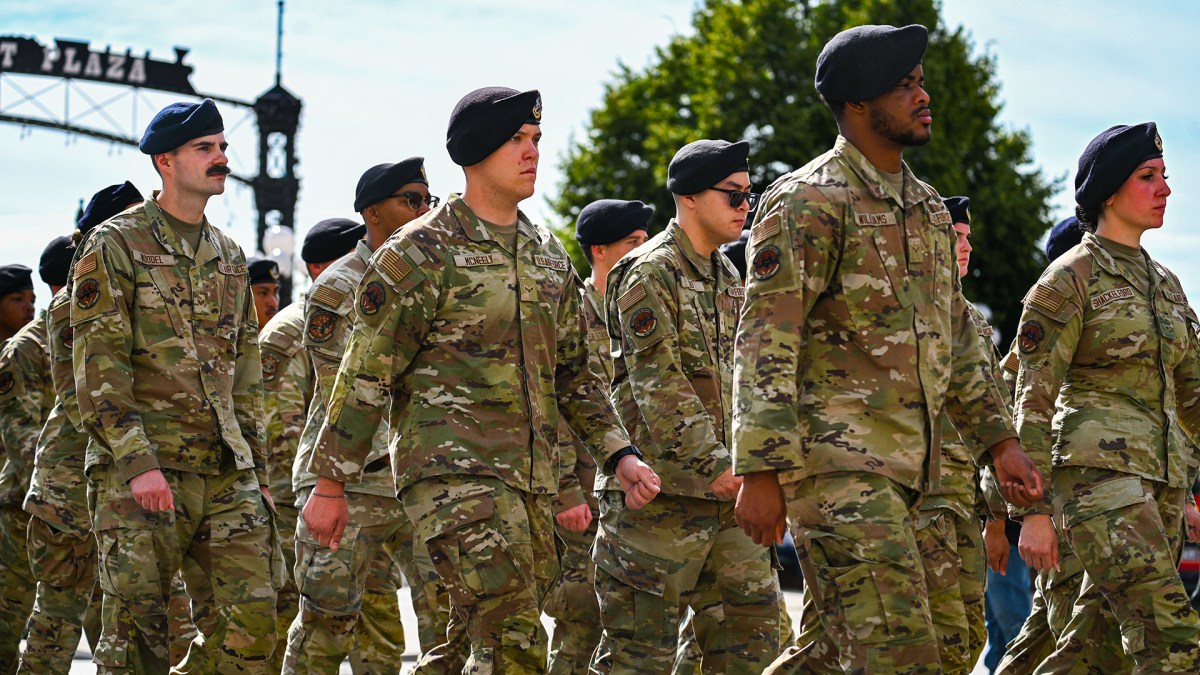
Nobody expects a parade to preface tragedy, but that’s essentially what happened at F.E. Warren in July 2025. Picture this: rows of crisp uniforms, forced smiles beneath Wyoming’s vast sky—then, a day later, a fatal shot in a barracks room. The story, equal parts harrowing and revealing, provides a rare peek behind the polished military facade, raising uncomfortable questions about camaraderie, command, and the lengths people will go to protect their own. As someone who’s always side-eyed authority, the parallels to other cover-ups (small and large) are impossible to ignore. Why do stories like these keep happening, and what’s at stake when truth takes a backseat in the name of order?
Parades, Pistols, and Paranoia: The Shooting at F.E. Warren AFB
On July 19, 2025, the 90th Security Forces Group from F.E. Warren Air Force Base marched through downtown Cheyenne, Wyoming, as part of the Cheyenne Frontier Day’s Grand Parade. Their participation was a public display of pride and professionalism, representing one of the nation’s most critical nuclear missile bases. However, this moment of unity and celebration would soon be overshadowed by a tragedy that exposed deep concerns about safety, honesty, and accountability within the ranks.
Just one day after the parade, on July 20, a fatal incident occurred inside the base. Airman 1st Class Marcus White-Allen, also a member of the 90th Security Forces Group, was handling his M18 pistol “in a joking manner” when the weapon discharged, killing fellow airman Brayden Lovan. The shooting was not only a shocking loss but also a catalyst for a series of events that would test the integrity and procedures of the unit.
In the immediate aftermath, White-Allen attempted to cover up the true circumstances of the shooting. He instructed two colleagues, Airman 1st Class Sarbjot Badesha and Airman 1st Class Matthew Rodriguez, to provide false statements to emergency responders. Badesha was told to claim that the gun fired when White-Allen slammed his duty belt on a desk, while Rodriguez was directed to say that the “holster went off.” These misleading accounts delayed the investigation and raised serious questions about the culture of honesty and responsibility within the group.
The incident quickly drew the attention of Air Force leadership and the broader military community. The Air Force Global Strike Command, which oversees the nation’s nuclear arsenal, responded by temporarily banning the use of the M18 pistol across its units and ordering a comprehensive inspection of the weapon. This decision reflected the gravity of the situation, given the M18’s role as a standard-issue sidearm for U.S. military personnel. Air Combat Command also implemented precautionary measures. In response to growing speculation, Sig Sauer—the manufacturer of the M18, based on the P-320 model—issued a public statement denying that the pistol could fire without the trigger being pulled.
The legal and disciplinary consequences for those involved were swift. During court-martial proceedings in late October, Badesha and Rodriguez admitted to making false statements. Badesha received 30 days in confinement, forfeiture of $1,545, and demotion to E-1. Rodriguez was sentenced to 10 days in confinement, 15 days’ restriction to base, forfeiture of $500, and demotion to E-2. Meanwhile, White-Allen, initially arrested in August, remained under investigation until he was found dead in his dormitory on October 8, 2025. His death, still under inquiry, added another layer of complexity and sorrow to the unfolding tragedy.
This sequence of events—beginning with a parade and ending with multiple investigations—highlighted the intense pressures faced by airmen tasked with safeguarding the nation’s most sensitive assets. The shooting at F.E. Warren AFB became a focal point for discussions about weapon safety, leadership oversight, and the mental health of those serving in high-stress environments.
Lies, Loyalty, and Legal Fallout: The Airmen Court-Martial Outcomes
The aftermath of the tragic shooting at F.E. Warren Air Force Base in July 2025 quickly shifted from a focus on safety failures to questions of honesty and accountability within the 90th Security Forces Group. As details emerged, it became clear that the initial response to Airman Brayden Lovan’s death was shaped not only by panic but also by a misguided sense of loyalty among the airmen present.
Pleading Guilty: The Weight of False Statements
During court-martial proceedings on October 30 and 31, Airman 1st Class Sarbjot Badesha and Airman 1st Class Matthew Rodriguez admitted to providing false statements to investigators. Both airmen revealed that they had lied at the direction of Airman 1st Class Marcus White-Allen, who had accidentally shot Lovan while handling his M18 pistol in a “joking manner.” Badesha was instructed to claim that the gun fired when White-Allen slammed his duty belt on a desk, while Rodriguez was told to say the “holster went off.”
- Badesha and Rodriguez pleaded guilty to lying to investigators, following direct orders from White-Allen.
- Their testimonies highlighted the complex interplay between loyalty to a fellow airman and the duty to uphold the truth, especially in high-stress situations involving loss of life.
Court-Martial Sentences: Consequences for Dishonesty
The legal consequences for Badesha and Rodriguez were swift and public. The court-martial outcomes reflected the seriousness with which the Air Force views integrity violations, particularly in the context of a nuclear security unit.
| Airman | Sentence | Financial Penalty | Demotion |
|---|---|---|---|
| Sarbjot Badesha | 30 days confinement | Forfeiture of $1,545 | Reduced to E-1 |
| Matthew Rodriguez | 10 days confinement, 15 days base restriction | Forfeiture of $500 | Reduced to E-2 |
These sentences sent a clear message about the Air Force’s expectations regarding truthfulness, especially during investigations of fatal incidents. The demotions and financial penalties further underscored the long-term impact such actions can have on a military career.
Ongoing Investigation and Tragic Aftermath
While Badesha and Rodriguez faced immediate legal repercussions, Marcus White-Allen remained under investigation for his role in Lovan’s death. The pressure of the ongoing inquiry—and the public scrutiny it attracted—became apparent when, on October 8, 2025, White-Allen was found dead in his dormitory at F.E. Warren AFB. His death, still under investigation by Air Force authorities, fueled speculation about the intense mental and structural pressures faced by service members entangled in the military justice system.
“We are committed to supporting the families and ensuring justice is served,” stated Col. Terry Holmes, commander of the 90th Missile Wing, reflecting the gravity of the situation and the Air Force’s resolve to address both the tragedy and its aftermath.
The court-martial outcomes and subsequent events at F.E. Warren AFB have prompted broader discussions about the culture of loyalty, the consequences of dishonesty, and the psychological toll of legal proceedings within the armed forces.
Weapons of Order, Machines of Mayhem: The M18 Pistol and Systemic Risk
The tragic shooting at F.E. Warren Air Force Base in July 2025 thrust the Sig Sauer M18 pistol into the national spotlight. As the standard sidearm for the U.S. Air Force, the M18 was designed to be a weapon of order—reliable, safe, and trusted by those tasked with guarding America’s nuclear arsenal. Yet, the incident involving Airman 1st Class Marcus White-Allen and Airman Brayden Lovan exposed not only the dangers of mishandling firearms but also the systemic risks that can arise when trust in weapon safety and professional conduct is shaken.
The M18 Pistol: A Weapon Under Scrutiny
The M18, a military variant of the Sig Sauer P-320, became central to the investigation after Lovan’s death. The P-320’s civilian version has faced multiple lawsuits alleging accidental discharges, raising questions about its safety features. This controversial lineage meant that, when the shooting at F.E. Warren AFB occurred, both the public and military leadership were quick to question whether the pistol itself could be at fault.
In the immediate aftermath, the Air Force Global Strike Command responded by suspending the use of the M18 pistol across its units and ordering a comprehensive inspection. This pause reflected the seriousness with which the Air Force treats potential weapon defects, especially when the security of nuclear assets is at stake. Air Combat Command followed suit, implementing its own precautionary measures.
Manufacturer’s Response and Inspection Results
Sig Sauer, aware of the growing scrutiny, issued a public statement emphasizing that the M18 could not discharge without the trigger being pulled. Laboratory analysis and internal Air Force investigations supported this claim. The findings were clear: the fatal shot resulted from a trigger pull, not a mechanical failure. White-Allen’s actions—brandishing the pistol “in a joking manner”—were ultimately to blame.
Lingering Doubts and Professionalism Concerns
Despite the official “no defect” verdict, doubts persisted both within and outside the military community. The P-320’s troubled reputation in civilian courts made some observers skeptical of the inspection results. The fact that junior airmen attempted to cover up the true circumstances of the shooting further eroded confidence in the system. These actions raised broader concerns about the culture of professionalism and accountability within the ranks, especially among those entrusted with the nation’s most sensitive duties.
- Weapon Reliability: The M18’s connection to the P-320’s legal history fueled ongoing debates about firearm safety in military service.
- Systemic Risk: The incident highlighted how a single lapse in judgment, combined with attempts at secrecy, can threaten not just individual lives but the integrity of the entire security apparatus.
- Leadership Response: The Air Force’s swift action to suspend the pistol and review protocols demonstrated a commitment to transparency, but also underscored the challenges of restoring trust after a high-profile tragedy.
As the Air Force continues to grapple with the aftermath, the M18 pistol remains a symbol of both the power and the peril inherent in the tools of military order. The episode at F.E. Warren AFB serves as a stark reminder that even the most advanced weapons are only as safe as the hands—and the culture—that wield them.
Accountability, All-Hands, and Aftermath: An Uneasy Reckoning at F.E. Warren
The aftermath of the July 2025 tragedy at F.E. Warren Air Force Base forced the Air Force to confront uncomfortable truths about safety, culture, and leadership within its ranks. In response to the fatal shooting of Airman Brayden Lovan by a fellow member of the 90th Security Forces Group, Air Force leadership moved quickly to address the shaken community. All-call meetings, gathering more than 1,400 personnel from the Security Forces Group, became a central feature of the base’s response. These sessions, led by the unit’s commander, were intended to foster transparency, reinforce the importance of professionalism, and recommit every airman to the core duties of their mission—especially in the high-stakes environment of nuclear security.
While official statements from leaders such as Col. Terry Holmes emphasized support for the affected families and a commitment to justice, the events at F.E. Warren revealed that words alone are not enough. The leadership’s promises of transparency and accountability were necessary first steps, but the base’s recent history—marked by four deaths in just four months—suggested that the problems ran deeper than any single act of carelessness or misconduct. The tragic sequence of events, culminating in the death of Marcus White-Allen, the airman responsible for the initial shooting, underscored the need for more than just procedural reviews or public apologies.
The legal consequences for those involved in the cover-up were clear and public. Airmen Sarbjot Badesha and Matthew Rodriguez faced confinement, demotion, and forfeiture of pay after admitting to making false statements about the incident. These punishments sent a strong message about the importance of honesty and integrity, especially in situations where lives and national security are at stake. Yet, the broader reckoning at F.E. Warren went beyond individual accountability. The Air Force Global Strike Command’s decision to temporarily pause the use of the M18 pistol and conduct a full inspection reflected a willingness to question established procedures and address concerns about equipment reliability. At the same time, the scrutiny placed on the Sig Sauer M18 and its P-320 lineage highlighted the complex interplay between human error, training, and technology.
Incidents like the one at F.E. Warren force military organizations to look inward. While formal statements and apologies are easy to deliver, real transformation requires a sustained commitment to change—one that addresses not only immediate failures but also the underlying cultural and systemic issues that allow such tragedies to occur. The series of deaths at F.E. Warren AFB served as a stark reminder that the well-being of personnel, the rigor of safety protocols, and the strength of leadership are all interconnected. As the Air Force continues to investigate and learn from these events, the hope is that this uneasy reckoning will lead to lasting improvements in accountability, transparency, and the safeguarding of those entrusted with the nation’s most sensitive missions.
TL;DR: A shooting at F.E. Warren AFB led to a tangled web of lies, tragic deaths, and institutional soul-searching, reminding us how fragile accountability remains in even the most tightly controlled environments.