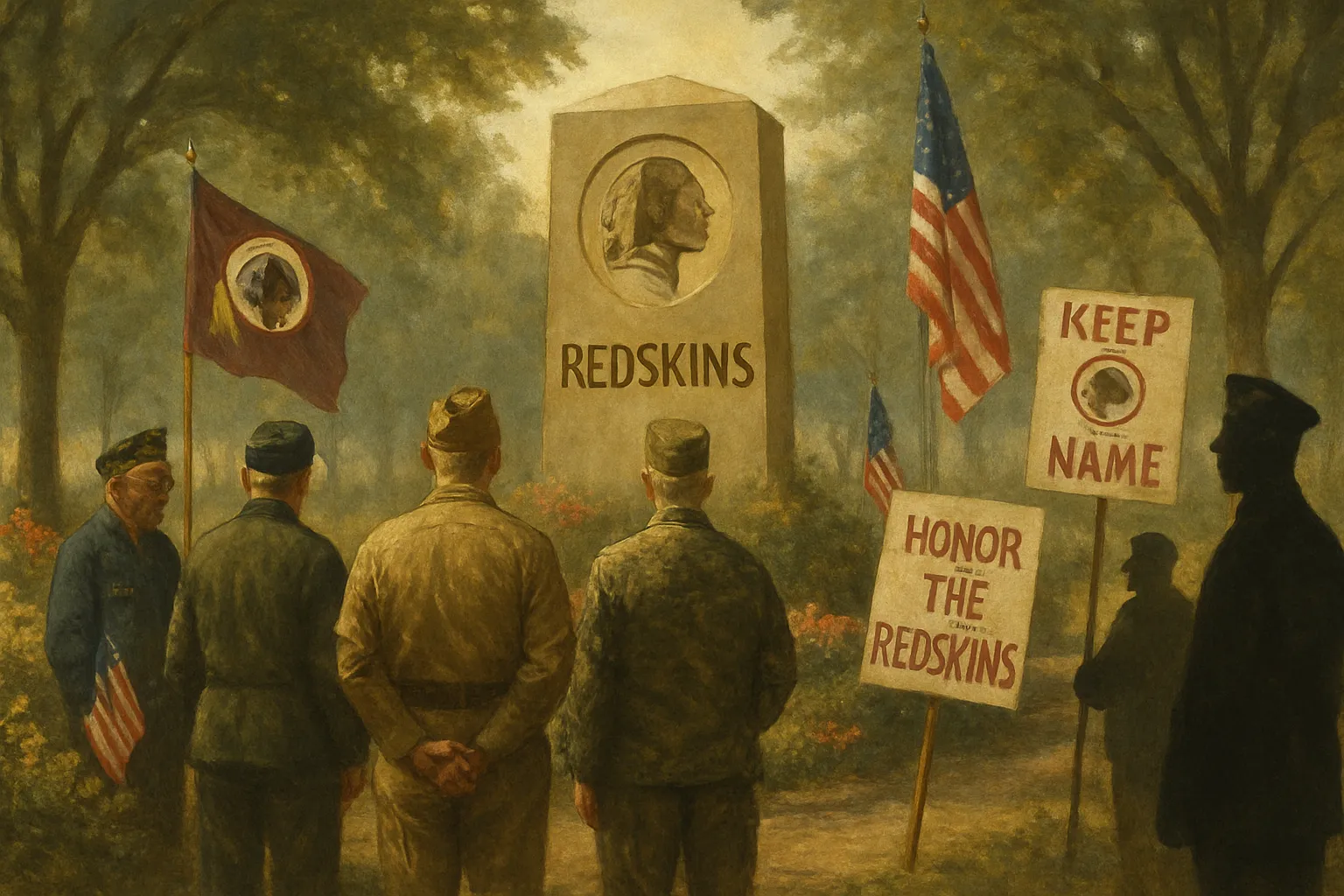
Forget what the official, government-approved websites tell you about the Belding "Redskin" Memorial; the story they push is designed to hide the nearly $335,000 battle it took to remove the racist mascot from the local school. Go to the supposed history archives like the National War Memorial Registry or the Historical Markers Database HMdb.org, (website last reviewed 11.13.2025) and you’ll find the memorial described as harmless history—a simple, neutral "tribute to all wars." The National War Memorial Registry can't even get the location right, listing it in Greenville instead of Belding, showing how far removed these central gatekeepers are from the local fight. Even worse, the park's own official site, beldingveteranspark.net, refuses to mention the "Redskins" memorial at all. (website last reviewed 11.13.2025) But that official record is a calculated lie. Stand in the park itself, and the truth is visible immediately: the supposed tribute is surrounded by fake flowers—a cheap, plastic gesture that perfectly mirrors the political fakery in the websites' descriptions. This cleaned-up version of history is no accident. It's how the people running these centralized websites and the local veteran establishment work together. They use this lie of omission to control the story, making sure we don't question the powerful people running our public spaces.
The Big Lie: The Veterans' Counter-Move
The most damaging truth these centralized registries omit is the massive political fight that forced the school to drop the mascot, focusing specifically on how the local veteran establishment reacted to that loss.
The local school district had to secure $334,690.60 in 2018 just to cover the replacement costs after they dropped the "Redskin" mascot. That precise, massive sum of money confirms the mascot was lost under heavy ethical and financial pressure. The funding came from the Native American Heritage Fund (NAHF), whose entire purpose in donating that money was to remove harmful imagery from public school property, not to help move it to the veteran park.
The memorial's erection, therefore, was the direct, organized counter-move by the local groups who supported the mascot and felt they had suffered a political loss. It was reportedly funded by the Byrd family, who deserve shame for bankrolling this monstrosity—a political monument designed to subvert a decision supported by Native American groups and thousands of dollars in charitable funding.
A Political Stunt: These websites completely fail to mention that the memorial was put up after the name was officially retired. This is the whole story. The monument isn't an old artifact; it's a protest monument. It was built by local veteran groups, angry they lost the debate, and they are now using a sacred veterans' space to continue fighting for a racist icon.
Neutralizing the Narrative: By ignoring the $334K cost and the timeline—and by misplacing the memorial in Greenville—these registries hide the conflict. The local park administrators' refusal to even list the "Redskin" memorial on their own official website (beldingveteranspark.net) proves the lie is systematic and local. Misplacing the site physically detaches the monument from the local community's actual history of protest and financial cost, making the gatekeepers' lie even more obvious. They want the memorial to look like a simple, quiet tribute. If they admitted it was the veteran establishment's symbolic defiance against the community's decision, its entire meaning would collapse. This would force people to ask: Did local veterans organize this act of defiance? And why are they allowed to use a veterans' park for a political grudge match? The National War Memorial Registry and HMdb.org function as the official stamp of approval for this rigged game of omission.
Weaponizing Patriotism to Protect a Racist Icon
The strategy used by the memorial's creators—the local veteran establishment and park administrators—is brutally effective: they take a racist symbol and wrap it in the moral authority of the American flag.
The term "Redskin" is a specific, hateful word rooted in the history of violence against Native American people. Yet, these registries call the memorial a "tribute to all wars."
This is how they weaponize patriotism. They try to cleanse the racist word by cloaking it in the absolute respect we have for military sacrifice. Their goal is to create a trap: if you point out that "Redskin" is offensive, they try to make you look like you are attacking all veterans and disrespecting the sacrifices they made.
The sacrifices of soldiers are being co-opted—taken over and used by the local veteran establishment—as a human shield to protect a racist icon that should have been permanently retired. The integrity of the veteran community's name is used to secure a political win for those who want the symbol to remain.
The Structural Lie: Honoring the Symbol, Erasing the People
The most damning truth that both the memorial itself and these official websites omit is the structural reality of the park.
The memorial park, organized and maintained by the local veteran establishment, has a prominent monument to the "Redskin" symbol—a dated, offensive logo. But the park has zero monuments dedicated to actual Native American veterans.
This isn't an accident; it shows the priorities of the local veteran establishment and their political allies:
They prioritize preserving the white community’s comfort and past identity—their desire to hang onto a symbol—over honoring the service and dignity of the actual Indigenous people who fought in those wars.
The veterans' response recreates every US betrayal of a Native American treaty. The NAHF funding and the school's decision represented a modern, moral agreement to remove the symbol. The veteran establishment's memorial deliberately broke that agreement, mirroring the historical pattern where the US government consistently used treaties to manage, displace, and ultimately eliminate the Native presence from the land.
The system makes a clear choice: the racist symbol is safe and celebrated, while the material presence and dignity of the Indigenous veteran is actively erased from the public landscape of national memory.
Conclusion: The Gatekeepers Win When You Stay Quiet
The descriptions on the National War Memorial Registry and HMdb.org are not just bad reporting; they are an act of centralized control designed to protect a local lie orchestrated by the veteran establishment. The cost of this deception is not just the $334,000 paid to change the school mascot; the real cost is the continuous erasure of Native American veterans from their own history. The people in charge transform a fierce political fight about race and land into a safe, quiet "tribute," ensuring the voices of the people being erased are never heard in the official record. By hiding the truth of the conflict and the real people involved, they make sure the rest of us stay quiet, accepting the lie as official history—and that's exactly how the power structure maintains control.