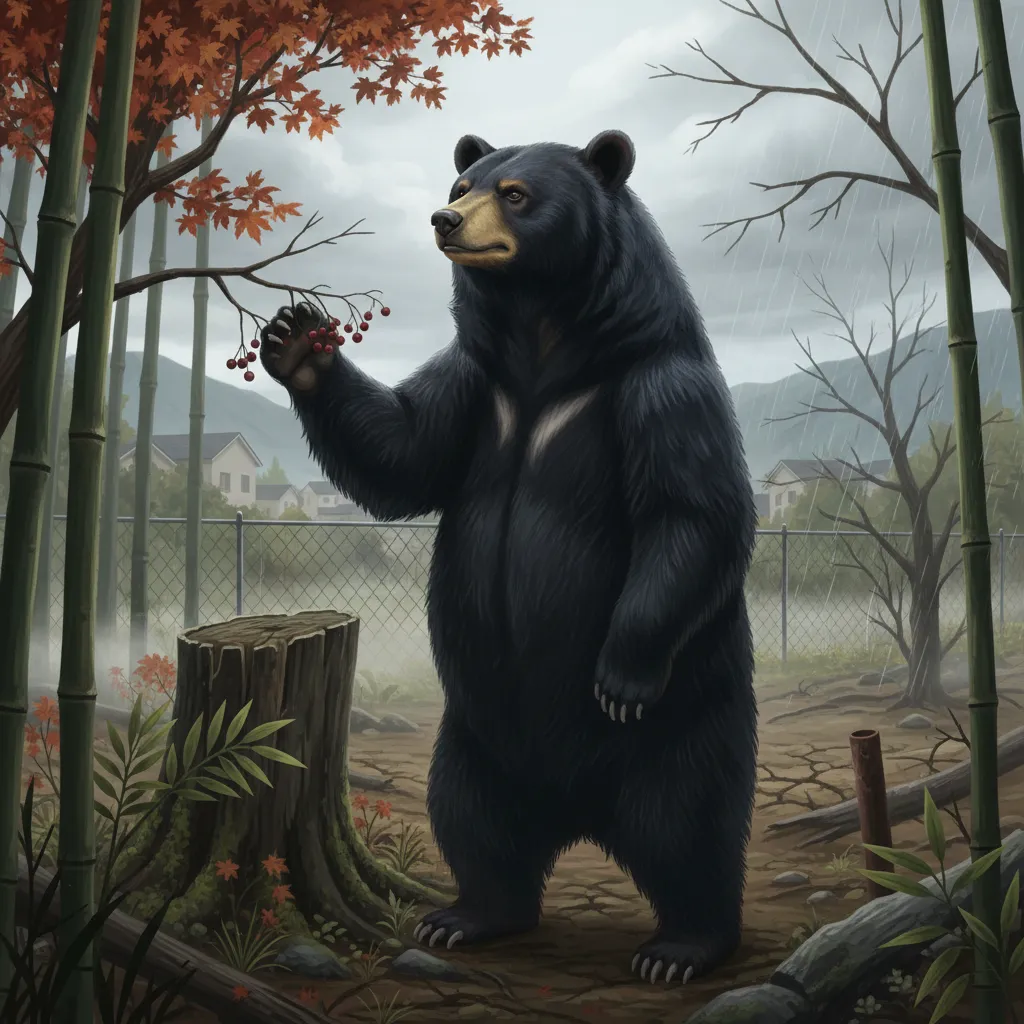
I’ll be blunt: I never thought I’d find myself inside a supermarket, nose deep in persimmons, startled by the blaring shriek of a human alarm. Yet here we are—me, a bear, forging through train stations, hot springs, and even schools, prowling for a meal. If you’d asked me a year ago, I’d have said humans kept their world and I kept mine. Now, after a record-breaking year of bear attacks and towns ringing with sirens, our boundaries are as blurred as forest mist.
An Unsettling Homecoming: Inside Japan's Bear Surge
I remember when these forests felt like home—dense, quiet, and full of promise. The trees once offered a feast of acorns, and the streams ran clear and cold. But now, as I wander through the hills of Akita, the landscape has changed. Where there were once bustling villages, I find empty houses and overgrown gardens, their branches heavy with persimmons and chestnuts. The silence is deeper, broken only by the sound of my own hunger.
This year, something is different. The acorns I rely on have vanished early, and the weather is strange—winters come late or not at all, confusing my instincts. I roam farther, driven by a gnawing emptiness in my belly. I am not alone. Since April 2025, more than 100 encounters between bears and humans have shaken Japan, with Akita suffering over 50 attacks—the most since 2006. The numbers are grim: at least 12 people killed, and many more injured. Each statistic is a story of fear, loss, and survival.
I sense the tension in the air. People whisper about us in markets and train stations, places I never dared to enter before. But hunger pushes me closer to their world. I have seen my kin rummaging for fruit in gardens, lingering near homes for what feels like an eternity. One night, I watched as two young bears tried to force their way into a house, drawn by the scent of ripe persimmons. The humans inside were terrified, and I understood their fear. We are no longer distant shadows in the forest—we are now unintended neighbors.
The crisis is rooted in changes beyond my control. As the human population in Akita ages and shrinks, entire neighborhoods are left behind. The fruit trees they planted now stand untended, a silent invitation to hungry bears like me. The hunters who once kept our numbers in check are growing old themselves, and few are left who remember the old ways. Meanwhile, our population has soared—over 54,000 bears now roam Japan’s mountains and valleys.
The humans have responded in ways I have never seen. Soldiers in white helmets and bulletproof vests now patrol the outskirts of towns, setting traps and carrying strange sprays that sting my nose. They do not carry guns, but their presence is a warning. The government calls this an “urgent matter,” and I can feel the urgency in every encounter. There are new rules, new patrols, and a sense that the old balance has been lost.
For me, each day is a search for food and safety. The forests I once knew are changing, and the boundaries between my world and theirs are fading. As I move through abandoned villages aglow with persimmons and chestnuts, I wonder what homecoming means when home itself is unsettled.
Why We’re Here: Food Scarcity, Aging Towns, and Bear Survival
In the past year, I’ve seen my world—and the world of my human neighbors—change in ways I never imagined. I am a bear, born in the forests of Akita, and lately, the line between my home and yours has blurred. The reason is simple but devastating: food is running out, and the landscape is shifting beneath our paws.
Our forests, once thick with acorns and beechnuts, are now strangely quiet. The trees have grown old, and some years, the acorns barely fall at all. This autumn, the hunger gnawed at me and my kin earlier than ever. We wandered farther, drawn by the sweet scent of persimmons and chestnuts left behind in abandoned orchards. These old farms, once bustling with life, now stand empty—fruit trees heavy with offerings no one comes to pick. For a hungry bear, it’s an irresistible call.
But why are these places empty? The answer lies in the human world. Villages that used to echo with laughter and the clatter of farm tools have grown silent. People are growing older, and the young have moved away to cities. The houses crumble, the fields go wild, and the boundaries between our worlds fade. With each year, as the humans disappear, we become bolder. We cross roads, slip through gardens, and sometimes, we find ourselves in the heart of your towns—at train stations, schools, even supermarkets—searching for anything to fill our bellies.
Climate change makes things even harder. Winters arrive late, or sometimes not at all. Our bodies, tuned to the old rhythms, get confused. The urge to hibernate grows weaker, but the hunger only grows stronger. We roam longer, searching for food that isn’t there. Some of us, desperate and thin, take risks we never would have before. That’s why you see us where you never expected: in your backyards, on your porches, sometimes even trying to come inside.
The humans, too, are struggling. I hear their voices—worried, angry, afraid. They talk about the growing number of bear attacks, the lack of hunters, and the soldiers sent to help. I see the traps and the warning signs. I sense their fear when they walk through the woods or tend their gardens. Yet, I also see how their own numbers are shrinking, how their communities are stretched thin, just like ours.
- Our homes are shrinking: Forests yield less food, and abandoned farms tempt us closer to humans.
- The humans disappear: Aging and migration empty villages, making our paths into town less risky.
- Climate change disrupts us: Unpredictable seasons leave us hungry and confused, pushing us to take chances we never would have before.
This is why we’re here—why bears and humans have become unintended neighbors. The crisis is not just about hunger or fear; it’s about two worlds colliding as both struggle to survive in a landscape that is changing faster than either of us can adapt.
Humans Strike Back: Troops, Traps, and Hazy Futures
From my hiding place in the tangled woods, I watch the world change. The humans are on the move. Their trucks rumble down mountain roads, soldiers in white helmets and heavy vests step carefully through the undergrowth, and the air is thick with the scent of new metal traps. For months, we bears have wandered farther and bolder than ever before, drawn by hunger and the promise of easy fruit in abandoned gardens. Now, the humans are striking back.
Stories ripple through our ranks—whispers carried by the wind and the rustle of leaves. Some say the soldiers come with strange weapons: not the thunder of guns, but the sharp sting of bear spray, the snap of net launchers, and the cold, silent promise of box traps baited with sweet-smelling food. I have seen these traps myself, gleaming under the morning sun, waiting for a careless paw. The humans are desperate, and their fear is as real as ours.
In Akita, the crisis is everywhere. Bears like me have wandered into places that once belonged only to humans—schools, train stations, even the steamy comfort of hot springs. Each time, the humans grow more anxious. I saw them gather after a woman was killed while searching for mushrooms. I saw the sadness when another lost her life on her farm. Even the simple act of delivering newspapers has become dangerous. The line between our world and theirs is thinner than ever.
Now, the government has sent in the troops. The Japan Self-Defense Forces have arrived, not with rifles, but with nets and traps. They work with local hunters—what few remain, their numbers dwindling as the human population ages and shrinks. I hear the humans talk about “government hunters,” about new rules and emergency plans. They debate who should hunt us, how many of us there are, and what to do next. The sense of urgency is everywhere, and it seeps into the forest like a cold mist.
Among us bears, there is confusion and fear. Some wonder if this sudden invasion of humans means peace, or only more danger. The traps are clever, and the soldiers are determined, but the forest is wide and wild. We listen to the stories—of bears caught and taken away, of others who escape, of humans who argue late into the night about our fate. The future feels uncertain, for both our kind and theirs.
As I watch from the shadows, I see how the crisis has forced humans to change. They set up warning systems, count our numbers, and try to protect their own. But I also sense their exhaustion—the way their communities grow smaller, their hunters older, their fears sharper. We are unintended neighbors now, bound together by hunger, fear, and the shifting shape of the land we share.
The soldiers in white helmets are a new chapter in our uneasy story. Their presence is a sign of how far things have gone, and how hard it will be to find a path forward. For now, we watch each other from the edge of the trees, uncertain what tomorrow will bring.
Wild Card: My Dream for a Paw-sitive Coexistence
Sometimes, when the world grows quiet and the wind carries the scent of persimmons, I let myself dream. I dream of a place where bears and humans are not unintended neighbors, but thoughtful cohabitants—where fear does not rule every meeting, and curiosity is not a death sentence. The crisis in Akita has shaken both our worlds, but it has also made me wonder: what if things could be different?
Imagine a town where, instead of abandoned orchards luring us into danger, humans plant berry patches and nut trees at the forest’s edge, just for us. There, we could fill our bellies before winter without wandering into your homes or schools. Less panic, more peace. I picture children watching from a safe distance as we forage, their parents teaching them respect, not fear. In this vision, the line between wild and human is clear, but not hostile.
What if, instead of only reacting after tragedy, we built clever warning systems together? Bells that ring when a bear approaches, not to scare us away, but to give everyone time to step back and stay safe. Signs that light up, alerting both bears and people. Maybe even food-sharing stations at the forest’s edge—simple, but life-saving. These ideas aren’t just dreams; they’re seeds of hope, rooted in the belief that technology and tradition can work together to protect both species.
I confess, I miss the old world sometimes. There was a time when curiosity between our kinds was gentle. You watched us from afar, and we watched you. Encounters were rare, but not always deadly. Now, every meeting is charged with fear—yours and ours. I see it in the way you rush indoors, the way soldiers and hunters arrive in helmets and vests. I feel it in the air, thick and heavy, every time a bear is trapped or a human is hurt. The crisis has made us both strangers in our own land.
But I believe we can do better. The solutions unfolding in Akita—traps, patrols, warning systems—are just the beginning. True coexistence will take more: a willingness to adapt, to listen, and to act before disaster strikes. It means caring for the land so it feeds us all, and training new generations—of both humans and bears—to respect each other’s space. It means governments and communities working together, not just in emergencies, but every day.
As I look to the future, my dream is simple: a world where bears and humans share the same mountains and valleys, not as enemies, but as neighbors who understand each other’s needs. Where a walk in the woods is safe for everyone, and curiosity leads to wonder, not tragedy. In this dream, we are not just surviving a crisis—we are building a paw-sitive coexistence, one thoughtful step at a time.
TL;DR: From the bear’s eyes: hunger, lost habitats, climate chaos, and human absence force collisions—literal and figurative—between our worlds, demanding empathy, action, and inventive new boundaries.