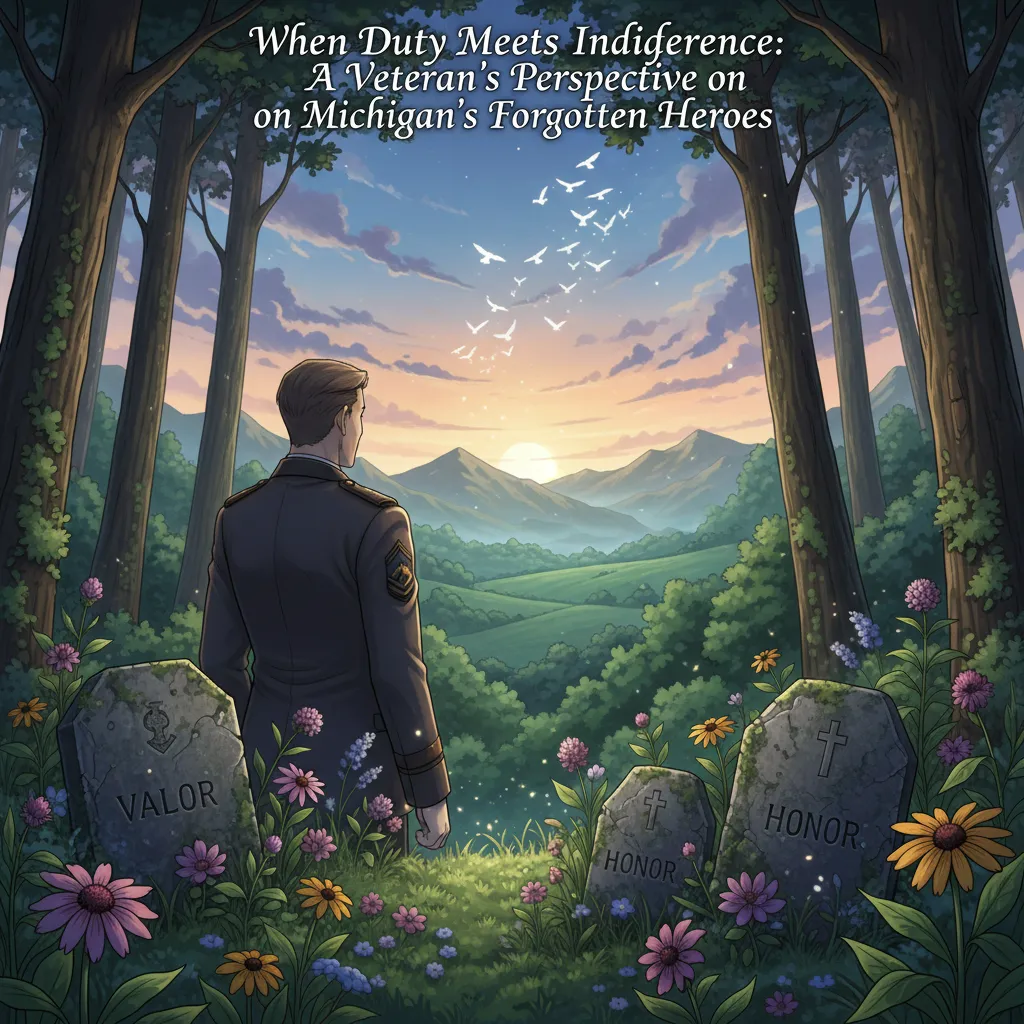
You can tell a lot about a country by how it treats its old soldiers. Take it from an old grunt who spent more cold nights in the jungle than a DC politician's seen in a lifetime. Standing in the rain at the Great Lakes National Cemetery every November—now THAT'S tradition. But this year, while those in Washington bicker and posture, our sacred tribute's been axed. I'm fired up, not just because our ceremony's gone, but because these suits have forgotten what real sacrifice looks like. Let me pull back the curtain for you.
I Fought For a Country—Now They Can’t Spare a Ceremony?
As a veteran, I have always believed that the strength of our country lies in how we honor those who serve. For years, the Veterans Day ceremony at Great Lakes National Cemetery in Holly, Michigan, has been more than just a date on the calendar. It is a sacred tradition—a time when thousands gather to remember, to thank, and to heal. This year, that tradition was erased not by weather or lack of interest, but by political gridlock and a government shutdown that stretched on for weeks.
When I first heard the news—just days before Veterans Day—that the ceremony was canceled, I felt a wave of disbelief. The announcement, shared on social media, was heartfelt but heavy. It wasn’t just about missing an event. For many of us, this gathering is the one moment in the year when our service is truly seen and heard. It’s a chance to stand among brothers and sisters in arms, to feel the gratitude of our community, and to remember those who never made it home.
A Tradition Erased by Budget Squabbling
The Great Lakes National Cemetery is hallowed ground. Every Memorial Day and Veterans Day, it fills with families, veterans, and supporters—people who come to pay their respects. But this year, the longest government shutdown in U.S. history brought everything to a halt. Essential services lost funding. Our traditions became casualties of a political fight happening far from the quiet rows of headstones in Holly.
It’s hard not to feel forgotten when the rituals that honor your sacrifice are the first to go. The ceremony isn’t just a formality; it’s a lifeline for many veterans. Some of us struggle with isolation, with memories that never quite fade. The ceremony is a reminder that we are not alone, that our service matters, and that our community stands with us.
Long-Standing Rituals Held Hostage by Politics
This year’s shutdown didn’t just cancel a ceremony. It disrupted lives across Michigan. Flights were grounded at Detroit Metropolitan Wayne County Airport and dozens of others. Families in River Rouge and Detroit scrambled to fill the gaps left by threatened SNAP benefits. Schools, neighborhoods, and even sports teams felt the ripple effects. But for veterans, the loss of our ceremony felt deeply personal.
- Memorial Day and Veterans Day: More than holidays—they are moments of collective remembrance.
- Ceremonies at Great Lakes National Cemetery: A rare chance for veterans to be recognized and supported.
- Political gridlock: Traditions and respect for service should never be bargaining chips.
I think of the parents in Ann Arbor fighting for safer schools, the families in Birmingham worried about reckless drivers, and the communities rallying after tragedy or hardship. Michigan is a place where people look out for each other. That’s why the cancellation stings so much. It feels like our leaders have forgotten what these ceremonies mean—not just to veterans, but to everyone who values service and sacrifice.
For Many Veterans, This Is Our Only Moment
For some veterans, the annual ceremony is the only time they leave their homes to be with others who understand. It’s the one day when strangers shake our hands, when children listen to our stories, and when we feel the weight of our service lifted by gratitude. Without it, many of us feel invisible again—like our sacrifices are only remembered when it’s convenient.
“We fought for a country that promised to remember us. Now, even a simple ceremony is too much to ask?”
Yet, even in the face of this disappointment, I see hope. I see it in the way our communities step up—like the volunteers who organize meal programs, the journalists who keep us informed, and the neighbors who check in on each other. I see it in the resilience of Michigan itself, a state that refuses to let hardship define us.
The absence of the Veterans Day ceremony is a painful reminder that our traditions are fragile. But it also reminds me of the strength we find in each other. Even when ceremonies are canceled, the spirit of gratitude and unity endures. We may be overlooked by those in power, but we are never forgotten by those who truly care.
Shutting Down More Than Buildings: How Political Gridlock Wrecks Real Lives
When politicians in Washington argue and stall, it’s easy to forget who really pays the price. The recent government shutdown—the longest in U.S. history—wasn’t just a headline or a talking point. Here in Michigan, it was a wave that crashed through our daily lives, leaving real people struggling in its wake. I saw it firsthand, and I know I wasn’t alone.
The cancellation of the Veterans Day ceremony at the Great Lakes National Cemetery in Holly was a gut punch. That sacred ground is where we gather to remember our heroes, to stand shoulder to shoulder and say, “You are not forgotten.” But this year, the gates stayed closed. The shutdown didn’t just lock up buildings—it locked out memories, traditions, and the dignity our veterans have earned.
But it didn’t stop there. The shutdown grounded flights at Detroit Metropolitan Wayne County Airport and 39 other airports across the country. Families missed reunions. Business trips were canceled. People who had saved for months to see loved ones found themselves stranded, all because lawmakers couldn’t find common ground.
Perhaps the most painful impact was on the basics of life—food and shelter. In River Rouge and Detroit, I watched communities scramble to fill the gaps left by government neglect. When SNAP benefits were threatened, local volunteers stepped up, organizing emergency meal programs and food drives. I saw churches open their doors, neighbors sharing what little they had, and schools doing their best to make sure no child went hungry. It was inspiring, but it shouldn’t have been necessary.
I’ll never forget the day my neighbor, a Navy veteran, knocked on my door. He’s a proud man, someone who’s always quick with a joke and slow to ask for help. But that day, he looked defeated. His SNAP benefits hadn’t come through, and rent was due. He’d called every number he could find—state offices, veterans’ hotlines, even his congressman’s office. No one called him back. He told me, “I served my country. Now I can’t even get a call returned.” That’s what political gridlock does. It leaves good people out in the cold, waiting for help that never comes.
This isn’t just about ceremonies or missed flights. It’s about dignity. It’s about the promise we make to each other as Americans—that no one gets left behind. When the government shuts down, it’s not just offices that close. It’s hope, it’s trust, and it’s the daily lifelines so many rely on.
- Flights grounded: Detroit Metro and other airports saw delays and cancellations, stranding families and workers.
- Meals missed: SNAP benefits paused, forcing communities like River Rouge and Detroit to organize emergency food drives.
- Dignity denied: Veterans and seniors left without support, their calls for help unanswered.
Yet, in the face of all this, Michigan’s spirit shone through. I saw parents in Ann Arbor fighting for safer schools, families in Birmingham demanding action on reckless driving, and local leaders stepping up when Washington failed. I read about a nurse who became a builder on the Gordie Howe Bridge, about Pistons superfan Tom Hur finally making it to a game, and about neighbors helping each other through the SNAP pause.
Our local journalists—like Samantha Sayles at WDIV ClickOnDetroit—kept us informed, shining a light on both the struggles and the triumphs. Through their reporting, I saw the real Michigan: resilient, compassionate, and determined to stand together, no matter what.
Political gridlock may shut down buildings, but it can never shut down our sense of duty to each other. When government fails, it’s the people—veterans, parents, neighbors—who step up and fill the gaps. That’s the Michigan I know. That’s the America I believe in.
The Spirit They Can’t Cancel: Michigan’s Quiet Defiance and Everyday Valor
As I sit with the reality that this year’s Veterans Day ceremony at the Great Lakes National Cemetery won’t happen, I feel the weight of what we’ve lost. For years, that sacred ground in Holly, Michigan, has been the place where our community gathers—rain, sleet, or snow—to honor those who wore the uniform. We stand shoulder to shoulder, veterans and civilians alike, united by gratitude and memory. This year, though, the gates will be quiet. The shutdown has silenced the bugle, stilled the flag, and left us to mourn in our own ways. But as I reflect, I realize that the brotherhood we share can’t be canceled by any shutdown, nor by the indifference of distant politicians.
This isn’t the first time Michigan has faced adversity. The recent government shutdown didn’t just close offices—it reached into our daily lives, canceling flights at Detroit Metro, threatening food assistance, and forcing families to find new ways to care for each other. In River Rouge and Detroit, neighbors stepped up to feed children when SNAP benefits paused. In Ann Arbor, parents fought for safer schools. In Birmingham, families demanded action on reckless driving. Even as headlines focused on political battles in Washington, our communities quietly kept moving forward.
What stands out to me most are the stories that don’t always make the front page. Like the nurse who traded scrubs for a hard hat to help build the Gordie Howe Bridge. She’s a reminder that service doesn’t end with a uniform—it just changes shape. Or the Pistons superfan, Tom Hur, who finally got to see his team play in Detroit after years of dreaming. There’s the joy in Romeo’s Halloween displays, the heartbreak of losing Marshawn Kneeland, and the hope in every act of kindness—like neighbors rallying around a Macomb woman facing deportation.
These stories show that when institutions falter, unity thrives. We don’t need a formal ceremony to honor sacrifice. We do it every day, in the way we look out for each other, in the way we remember our fallen, and in the way we refuse to let hardship define us. If a crusty Marine can become a nurse and help build a bridge, who’s to say we can’t rebuild the honor and tradition that a shutdown tried to take from us? Our spirit is not tied to a single day or a single place. It lives in every act of courage, every moment of compassion, and every quiet defiance against despair.
I am also grateful for the journalists who keep our stories alive. Samantha Sayles of WDIV ClickOnDetroit, an Oakland University alumna, has been a steady voice, reporting with empathy and accuracy since 2022. Through her work, and through the efforts of outlets like ClickOnDetroit, WILX in Lansing, and WEYI in Flint, the stories of Michigan’s resilience are told and retold. Even when the official record goes dark, these reporters shine a light on the truth of our lives—reminding us that we are not alone, that our struggles and victories matter.
So yes, the absence of the Veterans Day ceremony hurts. It is a loss that can’t be measured in words or headlines. But I find hope in the enduring gratitude we hold for those who served, and in the spirit of unity that defines Michigan. We honor our traditions not just with ceremonies, but with the way we live and care for one another. We adapt, we persevere, and we keep moving forward—together.
As a veteran, I know that duty doesn’t end when the music stops or the crowds go home. It lives on in the quiet moments, in the everyday valor of ordinary people. The spirit they can’t cancel is the one that binds us—rain, shutdown, or sleet. And as long as we remember that, Michigan’s heroes will never be forgotten.
TL;DR: Even when official ceremonies vanish, old veterans like me remember our comrades—because while politicians come and go, honor and solidarity aren't up for negotiation.