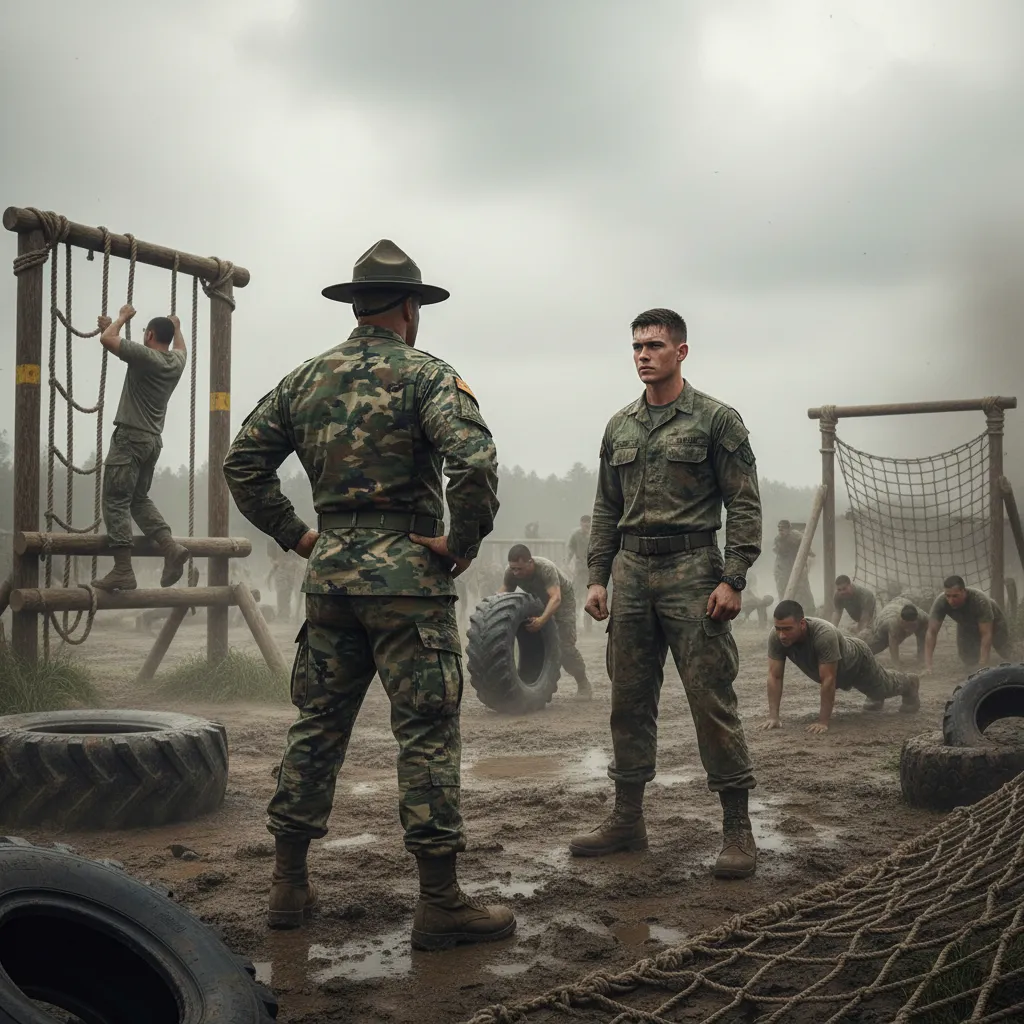
Ever imagined yourself at the edge of military boot camp, with every fiber of your being challenged, and that one drill instructor pushing you so hard you almost lost it—like, really almost punched him? Yeah, that was me. Before I ever put on the uniform, there was that burning fiery spirit inside me, itching to rebel against the noise and the pushing. Here’s how surviving Marine Corps boot camp almost met my impulsive side head-on.
The Art Behind the Scream: Drill Instructors as Vocal Warriors
Looking back, I used to think the legendary “drill instructor scream” was just about being loud—pure chaos echoing through the squad bay. But after surviving Marine Corps boot camp, and listening to stories like those shared on Task & Purpose, I realized there’s a real art to it. The scream isn’t just noise; it’s a tool, a weapon, and, in the right hands, a form of leadership.
Gunnery Sgt. Jensen Runion, named Marine Corps Drill Instructor of the Year for 2025, taught me that lesson firsthand. At Parris Island, he never lost his voice, even after years of training recruits. While some instructors sipped tea with lemon and honey to soothe their throats, Runion relied on something else: technique and discipline. He explained that the secret was to project from the diaphragm, not the throat. “Blow out your voice until it’s just hot air,” he’d say, “and trust it’ll come back stronger tomorrow.”
To help us learn, Runion introduced us to the green and black belts—simple bands worn around the abdomen. They weren’t just for show. These belts were tactile reminders to breathe deeply and push sound from the core. Every time I felt that belt tighten against my stomach, I remembered to use my whole body, not just my vocal cords. It was a lesson in control, not just volume.
What outsiders hear as chaos is actually a carefully practiced skill. Drill instructors like Runion turn their voices into instruments. Every command is sharp, clear, and impossible to ignore. There’s a rhythm to it—a way to cut through the noise and reach every recruit, no matter how tired or distracted. The scream isn’t about scaring us; it’s about grabbing our attention, breaking through our doubts, and forcing us to focus.
I remember the first time I tried to match that intensity. My throat burned, my voice cracked, and I sounded more like a croaking frog than a Marine. But with every day, every repetition, I learned. The green belt pressed against my core, reminding me to dig deeper. The black belt, worn by senior instructors, became a symbol of mastery—proof that the scream could be powerful and sustainable.
Runion’s method wasn’t just about protecting his voice. It was about teaching us to push past what we thought were our limits. The scream became a lesson in resilience. It showed us that with the right technique and mindset, we could do more than we ever believed possible.
Now, when I hear the word “scream” in the context of boot camp, I don’t think of chaos. I think of the art behind it—the discipline, the control, and the transformation it sparks in every recruit. Drill instructors aren’t just loud; they’re vocal warriors, using every tool at their disposal to forge something stronger out of us all.
Mental Grit Meets Rebellion: How I Nearly Lost It at Swim Week
Swim Week at Marine Corps boot camp is infamous. It’s the kind of trial that strips away any illusions you have about your own limits. For me, it was the week I came closest to breaking—mentally, physically, and emotionally. The pressure wasn’t just about treading water or making it across the pool. It was about doing it in front of everyone, knowing failure meant public humiliation and the dreaded “extra attention” from drill instructors.
I remember the smell of chlorine mixed with fear as we lined up, shivering in our green shorts. The echo of drill instructors’ voices bounced off the tile walls, their commands sharp and relentless. The pool looked wider and deeper than any I’d seen before. My heart hammered as I watched recruits ahead of me flounder, some pulled out by lifeguards, others making it by sheer willpower. The standard was clear: pass, or become the example everyone else would remember.
When my turn came, I felt every eye on me—my platoon, the instructors, even the lifeguards. I hit the water and immediately realized how different this was from anything I’d practiced. My arms and legs felt heavy, my breath ragged. Halfway across, panic set in. I could hear a drill instructor’s voice—louder than the rest—calling out my name, demanding I “move with purpose” or “get out and try again.” The shame of struggling in front of my peers was almost worse than the water itself.
That moment, I understood what Gunnery Sgt. Runion meant about mental barriers. My body wanted to quit, but my mind was the real battleground. Every stroke was a fight against the urge to give up. I remembered stories from other recruits—like J C’s account of his own Swim Week disaster, or the infamous Platoon 3053, where legends were made and broken in the pool. I told myself I wouldn’t be the one who failed.
But even in the middle of that misery, humor found its way in. One recruit, pale and shaking, blurted out, “This recruit feels like s–t, sir,” right in front of the whole platoon. For a split second, the drill instructor’s mask cracked. You could see the struggle not to laugh. The rest of us bit our tongues, trying not to lose bearing. That moment went viral later, a small rebellion against the iron discipline of boot camp. It reminded us that we were still human, even as we were being remade.
Swim Week was a test of more than swimming. It was about facing public failure, pushing past panic, and learning to find grit when rebellion bubbled up inside. The pressure to perform, the sting of being called out, and the rare flashes of humor all became part of the story. Looking back, it was one of the hardest weeks of my life—but it was also where I learned what mental grit really means.
Breaking Glass Ceilings – The First Obstacle That Scared Everyone
There’s a moment in every Marine’s journey when the real challenge isn’t just physical—it’s mental. For me, that moment came early, staring up at the infamous seven-foot bar on the confidence course. But before I ever tried it myself, I watched Gunnery Sgt. Jensen Runion, the very drill instructor who would later become a legend at Parris Island, face his own hesitation at that same bar. It’s easy to think of drill instructors as fearless, but Runion’s story taught me that everyone, no matter how tough they seem, has a ceiling they’re afraid to break through.
Runion wasn’t the biggest or the strongest Marine in his early days. In fact, he openly admitted he’d avoided the flip over that first bar for years. It was a move that looked impossible—seven feet of steel, slick with humidity, looming over every recruit. The bar wasn’t just an obstacle; it was a symbol of every doubt we brought with us to boot camp. I remember the day Runion finally decided to go for it. He stood there, silent for a moment, then launched himself up and over in one smooth motion. The entire platoon watched, stunned. If he could do it, maybe we could, too.
That single act from a leader did more than any shouted order. It showed us that fear is universal, but so is the ability to overcome it. Runion’s willingness to confront his own limits, right in front of us, made the impossible seem possible. It wasn’t about brute strength or perfect form—it was about refusing to let self-doubt win. I realized then that transformation in the military is less about being yelled at and more about learning to believe in yourself, even when every muscle in your body is screaming that you can’t.
Self-doubt is a quiet enemy. It creeps in during the long nights, the endless drills, and especially when you’re standing at the base of something that looks too high to climb. But seeing someone like Runion—someone who had every reason to play it safe—choose to try anyway, rewired something in my brain. It wasn’t just his victory; it was a lesson for all of us. Every recruit, from the loudest to the quietest, carries some version of that seven-foot bar inside them.
Military transformation, I learned, is about more than push-ups and shouting matches. It’s about breaking through the ceilings we set for ourselves. The first obstacle that scared everyone wasn’t just a bar on a course—it was the belief that we couldn’t do it. Watching leadership face their own fears gave us permission to face ours. In that moment, the confidence course became more than just a test of strength; it became a place where we learned to trust in our own ability to rise, even when we were sure we’d fall.
The Silent Strength: A Veteran’s Reflection on Yelling vs. Maturity
Looking back, I realize that boot camp was never just about who could yell the loudest or who could take the most. Sure, the first weeks at Parris Island felt like a contest of noise and nerves, with drill instructors’ voices ricocheting off the walls and every mistake met with “loud encouragement.” But as I’ve grown older—and as I’ve listened to veterans like Dave, a Ranger School graduate now in his seventies—I see that the real strength in the military isn’t measured in decibels. It’s measured in maturity, restraint, and the ability to lead without ever raising your voice.
Dave’s story sticks with me. He told me about his time in Ranger School, where yelling was almost nonexistent. Instead, hand signals and silent cues ruled the day. “Yelling is a sign of weakness,” he said, not with arrogance, but with the calm certainty of someone who’s seen bravado fade in the face of real adversity. In that world, silence wasn’t just golden—it was essential. Alertness, discipline, and mutual trust replaced the need for shouting. The lesson was clear: when you truly know your team and your mission, you don’t have to bark orders. You communicate with a glance, a gesture, or a simple nod.
This transition—from the chaos of boot camp to the quiet confidence of seasoned leadership—didn’t happen overnight. In my own journey, I started out believing that volume equaled authority. The louder you were, the more respect you commanded. But over time, I watched as the most respected leaders were often the quietest. They didn’t need to scream to get attention; their presence alone was enough. They had nothing to prove, and everything to teach.
Maturity, I’ve learned, is what separates the yellers from the true leaders. It’s what allows you to recognize when to speak up and when to stay silent. It’s the difference between reacting and responding, between commanding and guiding. The best leaders I’ve known—whether they were drill instructors, squad leaders, or old hands like Dave—understood that real authority comes from within. It’s built on experience, empathy, and the willingness to listen as much as to speak.
Now, when I hear the echoes of boot camp in my mind, I don’t just remember the shouting. I remember the moments of quiet strength: the silent nod before a tough task, the steady hand on a shoulder, the unspoken encouragement that said, “You’ve got this.” Those moments taught me more about leadership than any volume ever could.
So, as I reflect on my own journey—from almost punching a drill instructor to understanding the power of silence—I see that the real transformation wasn’t about surviving the noise. It was about learning to lead with maturity, to trust in my own strength, and to respect the silent bond that unites us all. In the end, it’s not the yelling that makes a Marine—or a leader. It’s the silent strength that endures long after the shouting stops.
TL;DR: Boot camp is more than just yelling and physical push — it’s a battlefield of the mind. Through personal tales of almost losing temper yet learning grit, this story peels back the layers of transformation in Marine Corps training.